Lower School Math Coordinator Samantha Resnik works with grade level teams and the administration to ensure that a student’s mathematical journey from PreK through Grade 5 is cohesive and forward-thinking. In this interview, she discusses the core philosophy, key concepts, and teaching strategies that guide Riverdale’s Lower School math program. With a curriculum that emphasizes deep conceptual understanding and critical content knowledge, students develop strong number sense, flexible problem-solving strategies, and the confidence to tackle the level of rigor that increases each year.
What is your role in the Lower School, and how do you support PreK–5 math instruction?
As the Lower School Math Coordinator, I ensure that a student’s mathematical journey from PreK through Grade 5 is a cohesive, developmental trajectory. I collaborate weekly with faculty to analyze student work and assessment data, using those insights to adapt the curriculum to meet the needs of all students. This allows us to provide flexible differentiation, ensuring every child—whether they need more concrete scaffolding or an abstract challenge—finds their “just right” level of productive struggle.
How would you describe Riverdale’s overall philosophy for teaching math in the Lower School?
We view mathematics as an active process of construction, not a passive act of consumption. Our program balances conceptual understanding, procedural knowledge, computational fluency, and problem solving skills. We approach math with authentic, contextual investigations where students act as mathematicians, identifying patterns, making conjectures, and defending their ideas. These concept building units are balanced with opportunities for reinforcement and skill building.
What core concepts and skills are students building from PreK through 5th grade?
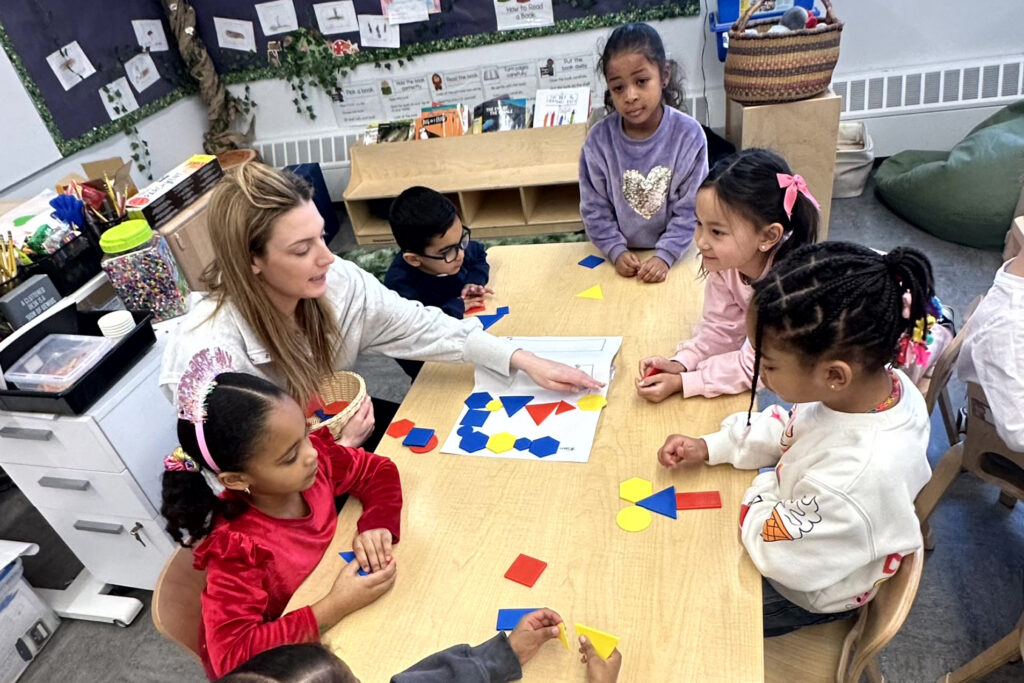
The “big ideas” evolve from counting and cardinality in the early years to proportional reasoning and algebraic thinking by 5th grade. Underpinning it all is the development of a number sense that transitions from the concrete (counting physical objects) to the representational (representing ideas through drawings) to the abstract (working fluently with symbols and variables).
What does strong number sense look like by the end of 5th grade?
Strong number sense is the ability to look at a problem and ask, “What do I notice about these numbers?” before deciding on a strategy. By 5th grade, a student should demonstrate efficiency and flexibility. In order for students to approach a problem with this lens, we have built a curriculum that develops each student’s strategy toolbox, creates opportunities to practice different strategies from Pre-K all the way through 5th grade. For example, if asked to solve 19 x 20, a student with strong number sense doesn’t immediately “stack” the numbers; they might see 19 as (20 – 1) and calculate (20 x 25) – 25. Having a strong number sense also involves a keen sense of estimation, one of the most broadly applicable skills students learn in the Lower School. This means having the ability to predict a reasonable range for an answer and recognize when a result “doesn’t make sense” in a real-world context.
Why does math instruction today emphasize conceptual understanding and multiple strategies?
The math programs that many of us grew up with (or at least I grew up with!) were designed during a time when memorization and repetition of specific skills, especially computational skills, were valuable. In an era of instant computation, the value of a mathematician has shifted from calculating to problem-solving. Emphasizing conceptual understanding and approaching problems using a variety of strategies builds deeper understanding and critical thinking skills. While “stacking” numbers to subtract is a valid tool, it is only one tool. By teaching multiple strategies, we ensure students truly understand the underlying properties of operations. It is these skills that we hope all students take with them, regardless of whether or not they end up in a math-related field.
Why are students encouraged to show their thinking using models, drawings, and written explanations?
When students translate a thought into a model (like an open number line or an area model) or a written explanation, they are solidifying their internal logic. Research shows that connecting visual and symbolic representations strengthens neural pathways. Working in multiple modalities helps develop deeper problem-solving skills by building a bank of tools that can be used for different types of problems. If writing equations isn’t working, can I draw a model that will help me move forward? Math is also a social endeavor. Being able to share and communicate how you know something makes the entire mathematical community stronger; it is how we learn from each other as well as how we deepen our own understanding.
How does Riverdale’s approach differ from how many parents may have learned math?
For many parents (myself included!), math focused largely on procedural knowledge when we were growing up. You learn an algorithm, you replicate that algorithm, you arrive at a solution. The solution was the only thing that mattered. In our classrooms, the process is as valued as the product. We treat errors as data points and opportunities for growth. Critical thinking, the ability to connect or synthesize across different areas of math and are valued. I often share that when I was in first grade, and I figured out that 6 + 7 was the same as 6 + 6 + 1. At the time, I thought I was cheating because 6 + 7 was something to “just know.” Today, we celebrate those insights as sophisticated numerical reasoning. We want students to realize that math isn’t about following a recipe; it’s about understanding the ingredients.
How do you differentiate instruction to both challenge and support students at different levels?
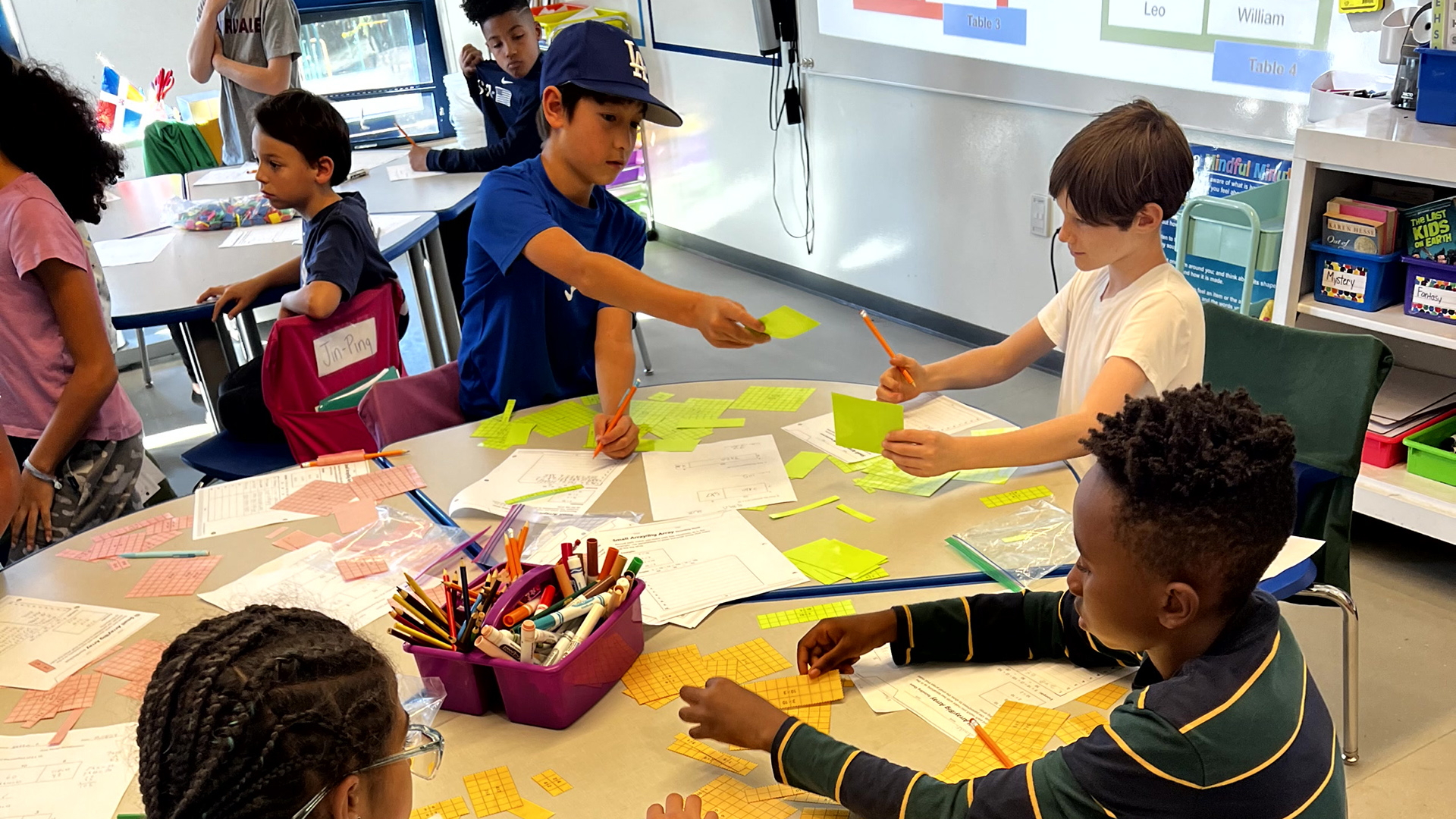
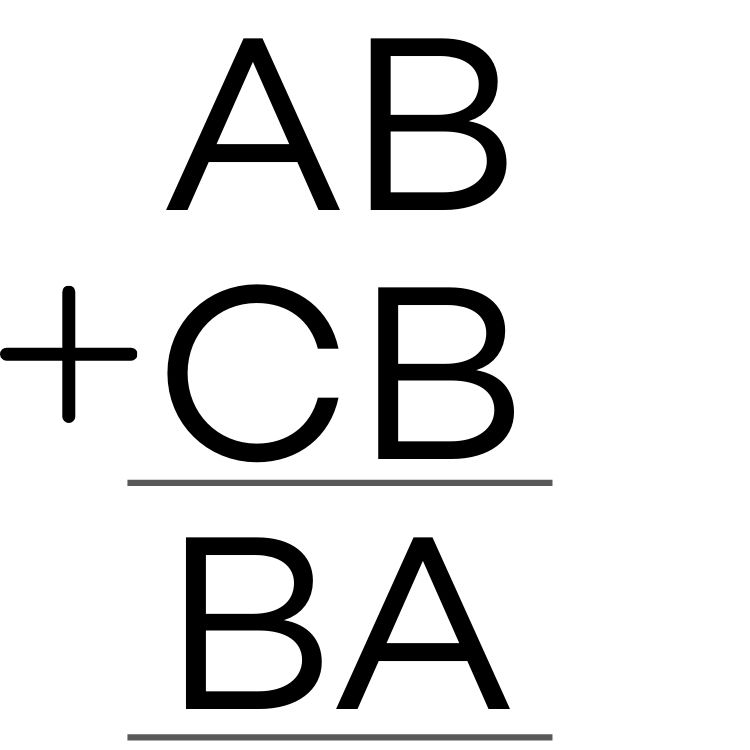
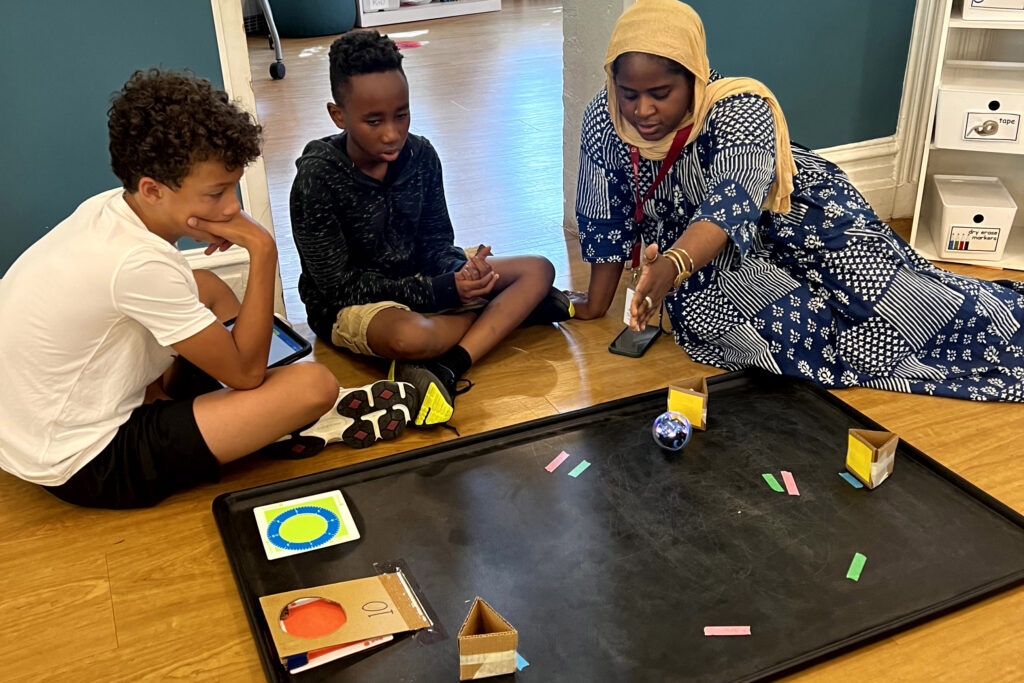
This is the core of my day-to-day work with teachers! By looking closely at student work and assessment and observing students during class, teachers know who might need more scaffolding and which students are comfortable with a particular skill. Our classrooms often use a workshop model that allows for high levels of personalization. While the whole class may explore the same “big idea,” the entry points differ. For example, when working on addition in third grade, one group of students might be practicing the standard algorithm for addition using base ten blocks, while another group of students might be applying these skills to an algebraic puzzle called a cryptarithm. This ensures that every student is working at the edge of their understanding, building both competence and confidence. At least once per week, classrooms work in a stations model during which four groups of students are working on four different highly differentiated activities simultaneously. During a period, students get to two of the four stations.
How do you help students build confidence and see themselves as capable mathematicians?
Our school year opens with a Week of Inspirational Math. This week of math lessons is designed to serve as a foundation for the year, establishing a growth mindset around math and solidifying the belief that everyone can learn math at high levels. They foster a community of learners who see mathematics as a creative, multi-dimensional subject. By valuing diverse ways of thinking and emphasizing that “fast math” isn’t necessarily “deep math,” all students feel included. The rest of the year builds on this foundation, creating a community of students who see themselves as highly capable mathematicians.
How does the Lower School program prepare students for future pursuits and pathways in mathematics?
Our goal is to ensure students enter Middle School as flexible mathematical thinkers rather than solely calculators. Higher-level math requires persistence. By engaging in multi-day investigations, students learn to grapple with complex, non-routine problems. They develop the “mathematical grit” needed to navigate challenges without looking for an immediate shortcut. By regularly practicing “math talk” and written explanations, our students become adept at constructing viable arguments, a skill that is essential across all academic disciplines. Ultimately, we aren’t just preparing them for the next grade level; we are cultivating the critical thinking and analytical skills that will serve them in any field they choose to pursue.