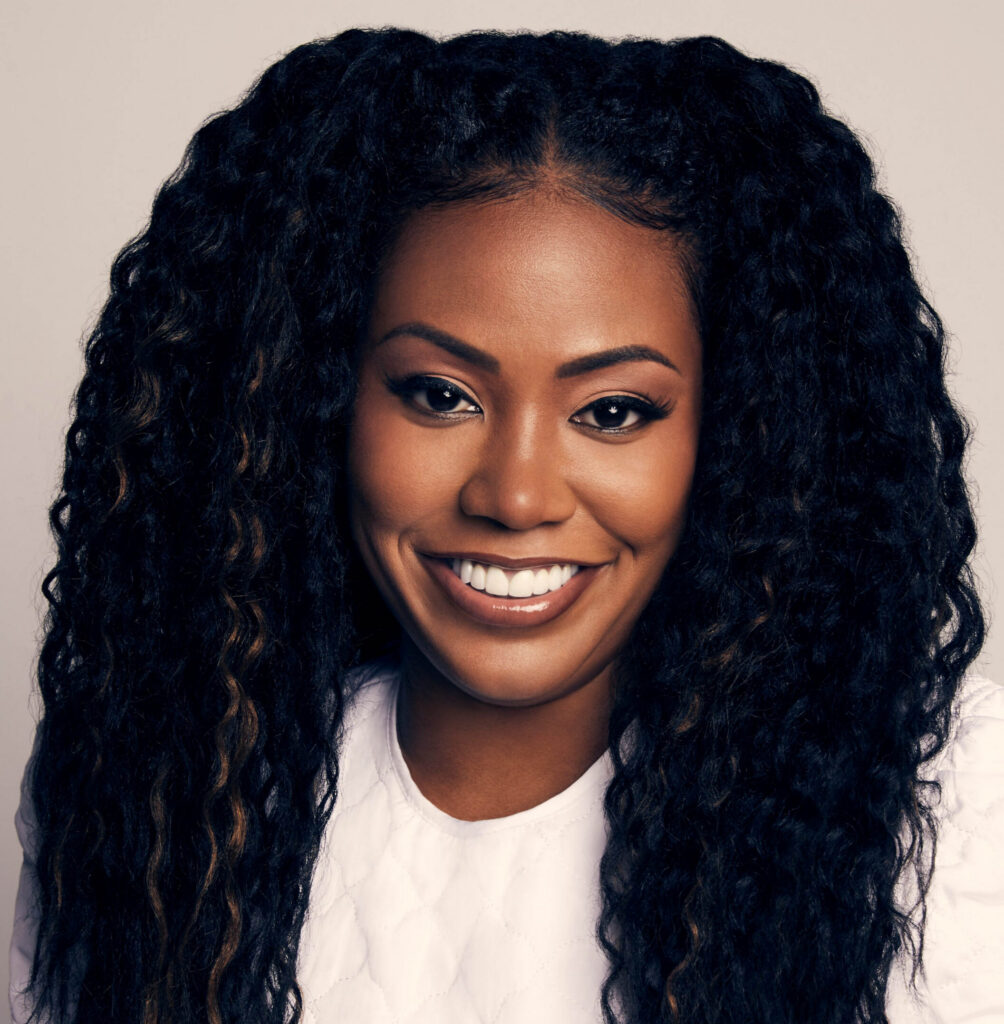
Can you share a bit about your background and how you got into the music business?
I grew up completely immersed in music and entertainment. My mother is a singer and dancer—she was still dancing the day before I was born—and she continues performing to this day. My father, Vaughn Harper, was a longtime radio personality at New York’s WBLS and a pioneer of the Quiet Storm format. Growing up around that creativity, I knew I wanted to work in music, even before I knew exactly what role I wanted to play. That passion shaped my choice of college, my majors, and my early internships.
After graduating from Syracuse University in May 2000, I began an internship at Elektra Records that June through a connection my father had with Sylvia Rhone, who was then Chairwoman and CEO of Elektra Entertainment Group. I spent my internship in radio promotion, but it helped me discover that marketing was where I really wanted to be—closer to the artists, the creative process, and the work of connecting music with audiences. By July, I had been hired as a full-time assistant in marketing.
As Elektra was folded into Atlantic Records, I continued to grow by taking on new challenges and working on projects including the Hustle & Flow soundtrack and Trey Songz. Over the years, I advanced from assistant to Product Manager, Vice President, and ultimately Senior Vice President, Head of Marketing at Atlantic Records.
In 2022, I made the move from New York to Los Angeles to become Executive Vice President of Marketing & Artist Development at Warner Records, where I helped lead the creative and commercial strategy for a diverse, multi-genre artist roster through 2025.
What was a pivotal learning moment in your journey towards becoming an executive?
One of the most pivotal moments was realizing that being an executive isn’t just about excelling at your own work; it’s also about developing, managing, and mentoring others. Early on, I was intensely focused on delivering for my artists and projects. As I progressed, my mentor and boss at the time, Julie Greenwald, former Chairman of Atlantic Music Group, helped me recognize that I had reached a point in my journey when I needed to grow as a leader of people, not just projects.
I reflected on leaders I had worked with at Elektra and Atlantic, thinking about what I admired in their styles and how I could incorporate those qualities into my own approach. I also realized that not everyone learns, communicates, or responds to feedback the way I do. Learning to adapt my approach to bring out the best in different people fundamentally changed the way I thought about leadership. The more I helped others recognize their strengths and succeed, the more rewarding that work became.
I came to see artist development and people development as equally important parts of my work. I had benefited from executives who invested in my growth, and I wanted to create those same opportunities for the people coming up behind me.
How was your experience attending Riverdale, and how did it influence your personal and professional growth?
Starting Riverdale in seventh grade was definitely a culture shock. I came from a public school in the Bronx, where most students looked like me, to an environment with very little racial or socioeconomic diversity at the time. Socially, it could be challenging and, at times, isolating as a student of color. I had to learn to navigate those differences early on.
At the same time, Riverdale undeniably set me up for success academically. It taught me how to manage a demanding workload, think critically, and develop resilience. Those skills helped prepare me for the corporate world and executive leadership in ways I didn’t fully appreciate until much later.
Outside the classroom, I also found ways to contribute on my own terms. I played on the JV basketball team before becoming the team manager, which, looking back, may have been an early sign of the product manager in me. I still got to be part of the team and everything happening behind the scenes—without actually having to play! It was a reminder that there are different ways to add value to a team.
What piece of advice would you give to current students or young alumni trying to break into competitive fields?
I always tell people that internships are one of the best things you can do. They give you a chance to explore an industry, understand how a company operates, and discover which kinds of work truly interest you before committing to a career path.
My experience with internships began in high school, when I worked at Spike Lee’s retail store, Spike’s Joint, while my mother was working at the record label 40 Acres and a Mule Musicworks. During college, I spent time at radio station WWRL and in a Sony Music summer program. Together, those experiences exposed me to different parts of the business, from radio and CD manufacturing to record labels, and gave me a much fuller sense of how the industry worked.
My internship at Elektra was especially pivotal—not only did it help me discover where I wanted to focus my career, but it also gave me my first real opportunity to demonstrate what I could contribute. Had I not taken that opportunity, I might never have gotten my foot in the door. Internships also allow employers to see your work ethic and potential firsthand. I’ve hired many people who began as interns because I already knew their abilities, initiative, and fit with the team. Those early experiences and relationships can shape a career in ways you never anticipate.
What’s next for you, and how have you approached this next chapter of your career?
After parting ways with Warner Records in 2025, I made the intentional decision to take some time off to recalibrate, reflect on my career, and think about what I wanted my next chapter to look like. After spending 25 years in the music industry, I felt it was important to give myself the space to step back and be thoughtful about what came next, rather than immediately jumping into another role.
I’m still exploring my next executive opportunity in music and entertainment, but I’ve also used this time to pursue something completely new. I’ve ventured into entrepreneurship through franchising and am currently preparing to open my first iFlex assisted stretching studio in West Hollywood, California. It’s been an exciting opportunity to challenge myself in a different industry while applying so much of what I’ve learned throughout my career about leadership, marketing, building teams, and creating meaningful connections with people.
This chapter has reminded me that career growth doesn’t always have to follow a straight line. Sometimes giving yourself permission to pause, explore, and take a different path can be just as valuable as the next promotion.
What’s currently on your personal playlist?
I’m a massive mood-playlist person! I have playlists for working out, cooling down, driving, and just about every mood in between. Lately, I’ve been listening to Jhené Aiko’s new album, Westside Whimsy, T.I.’s final album, Kill the King, and plenty of ’90s and 2000s R&B and hip-hop throwbacks. My time at Warner also expanded my musical palate, particularly in pop and country, with artists like Benson Boone, Teddy Swims, and Zach Bryan. And, of course, whatever catchy pop song my seven-year-old son is loving at the moment is always in rotation!