Feature
Forged in Ice
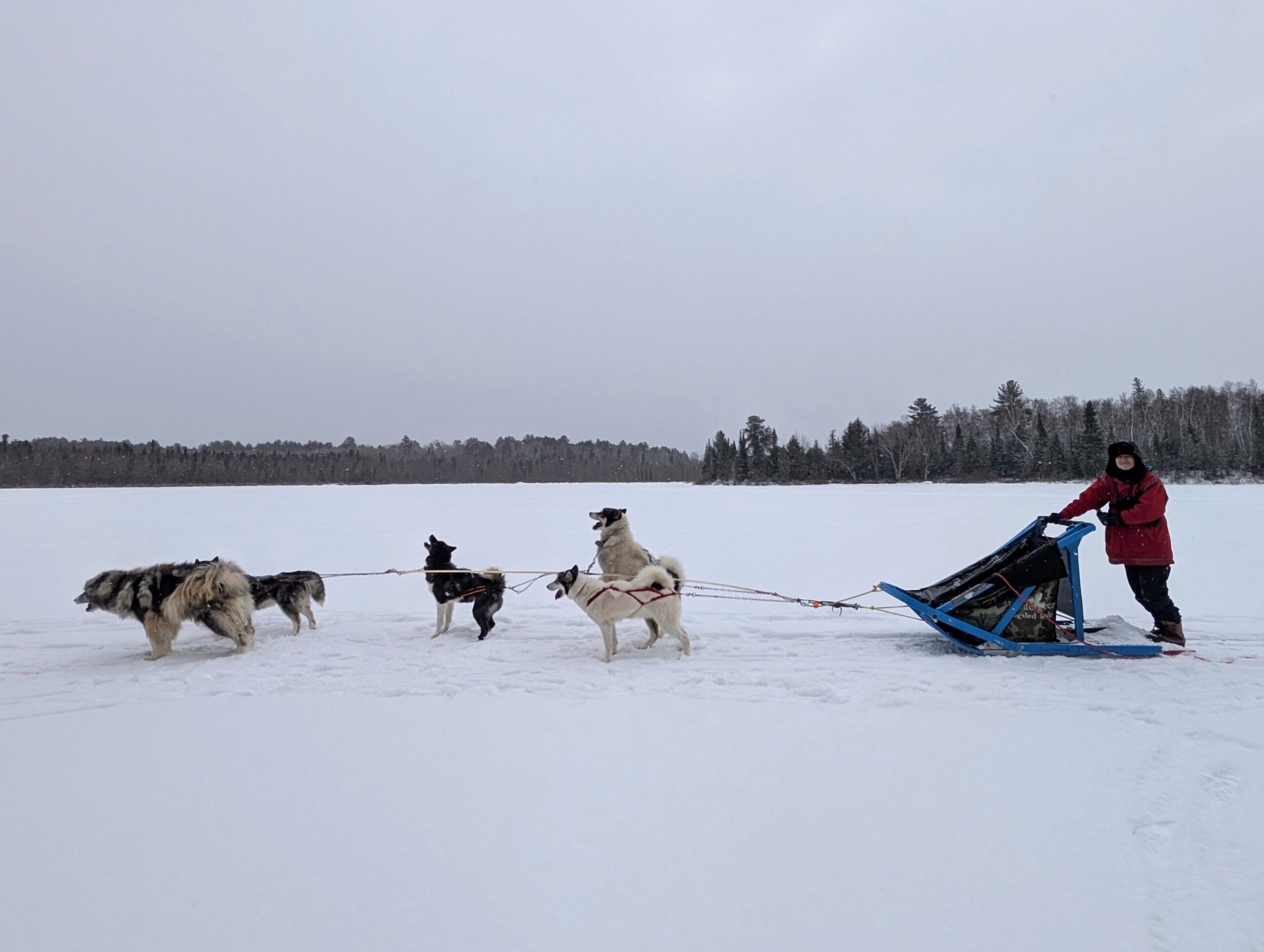
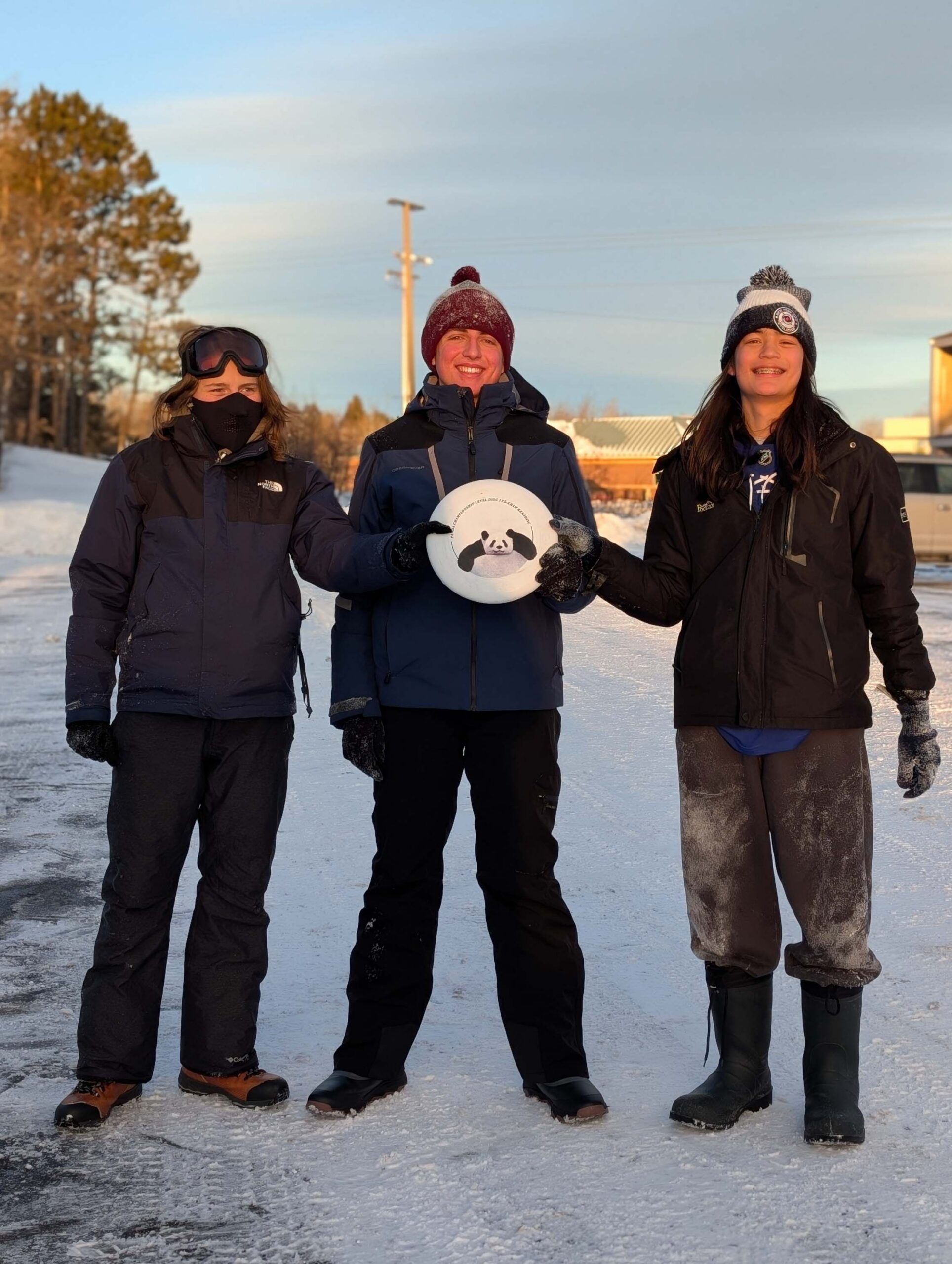
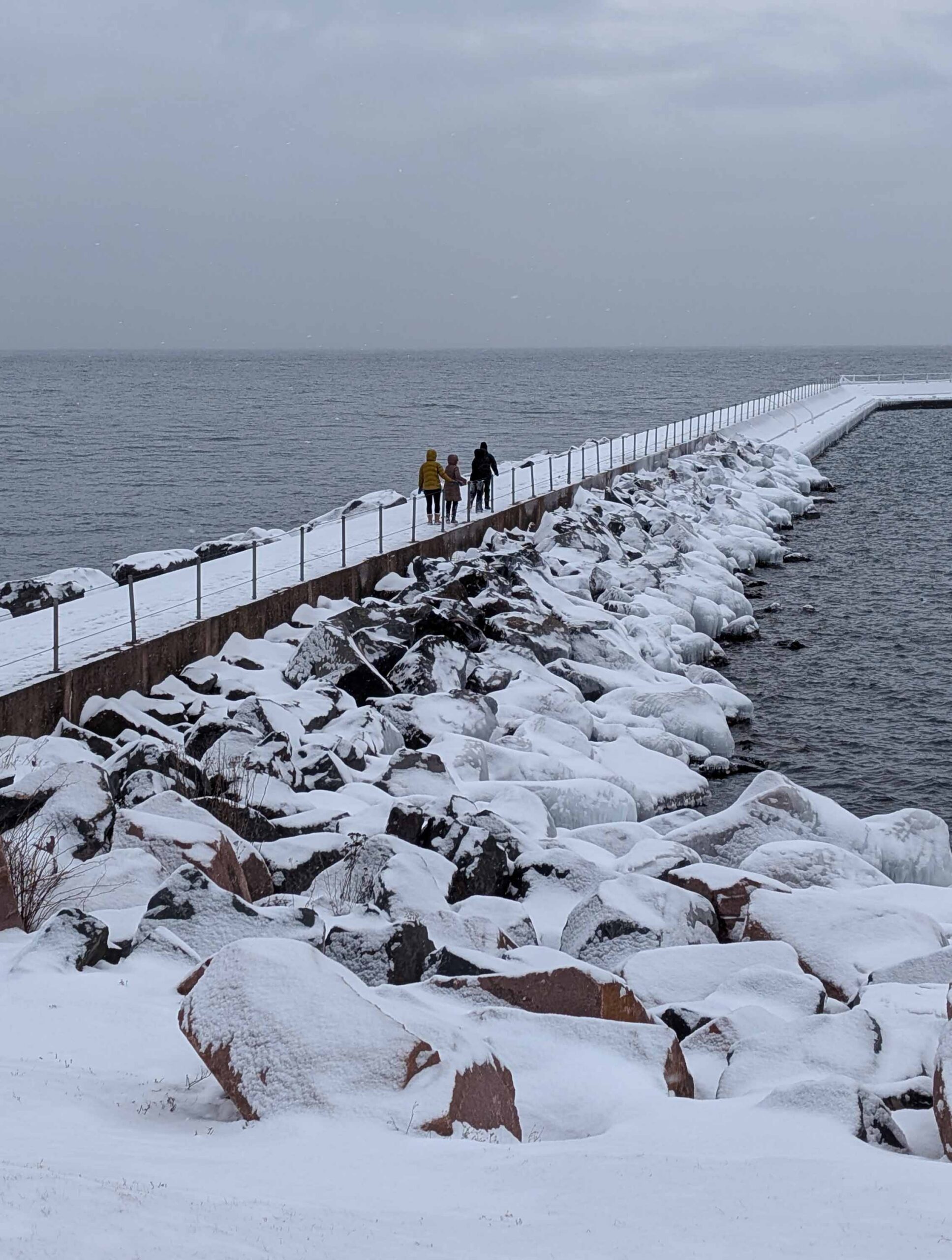
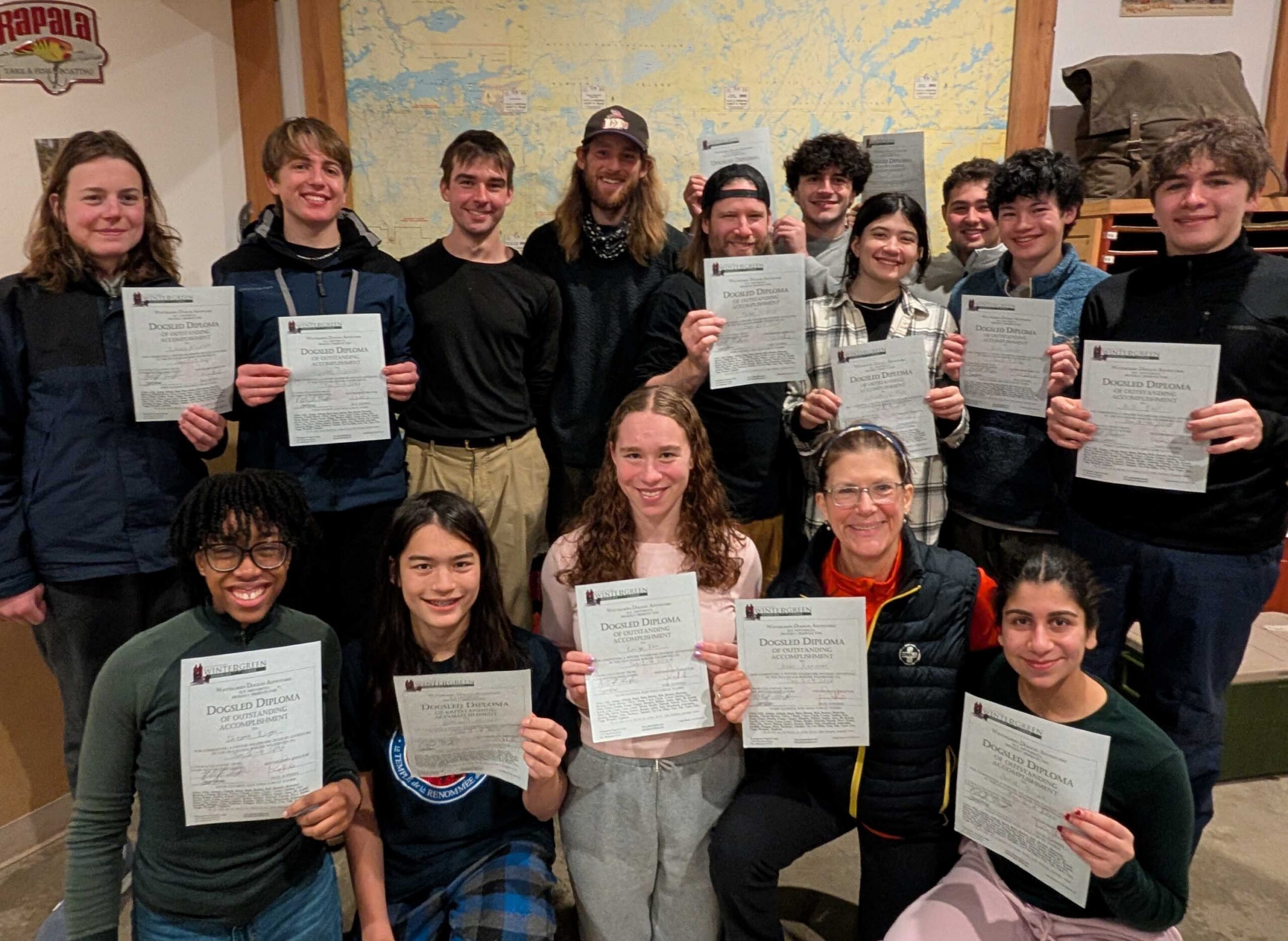
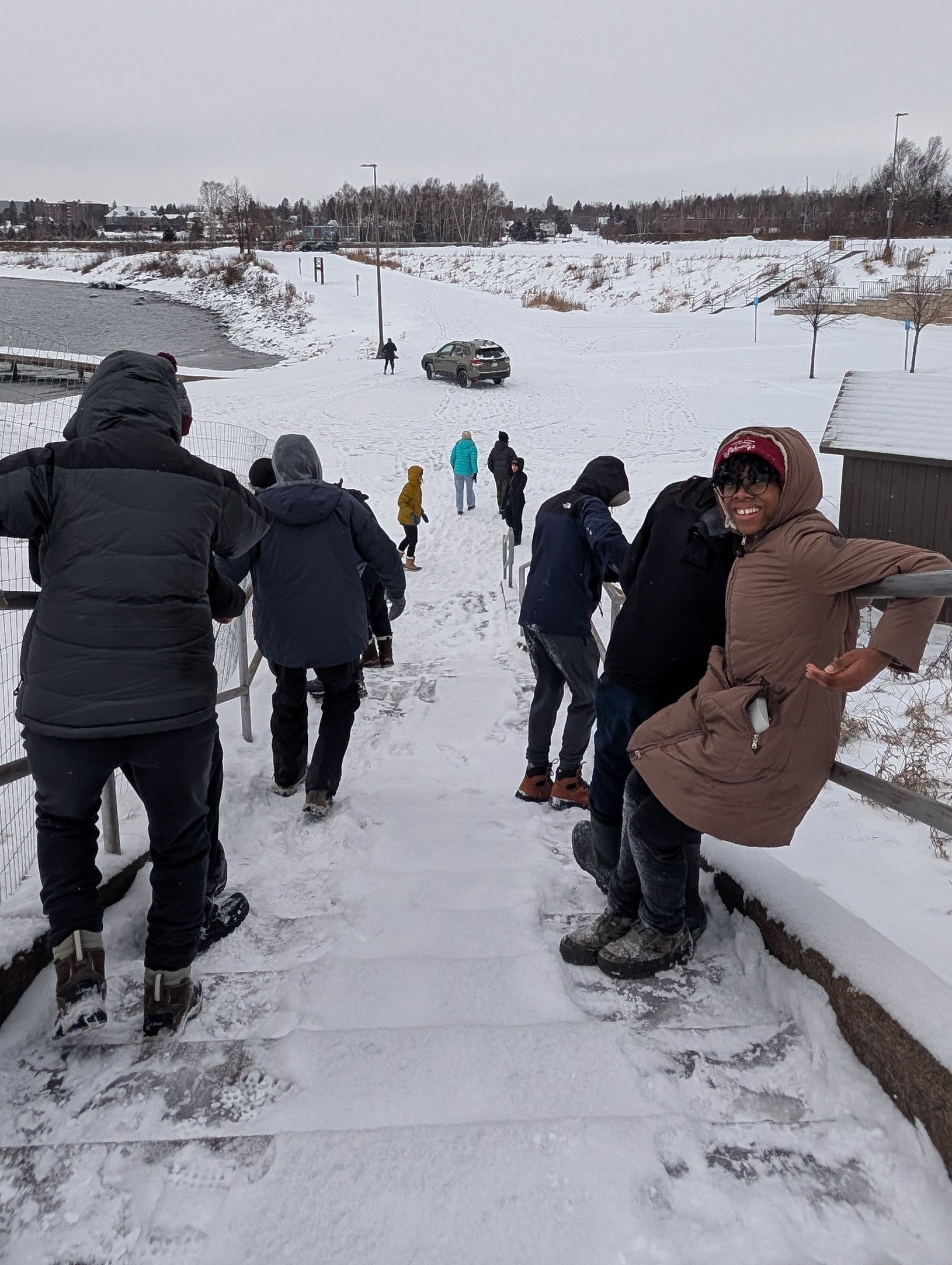
Ten degrees below Fahrenheit. Frozen lakes. Teams of eager sled dogs waiting to run. Over winter break, 11 Upper School students traveled to Minnesota’s Boundary Waters Canoe Area Wilderness for Riverdale’s newest place-based learning experience.
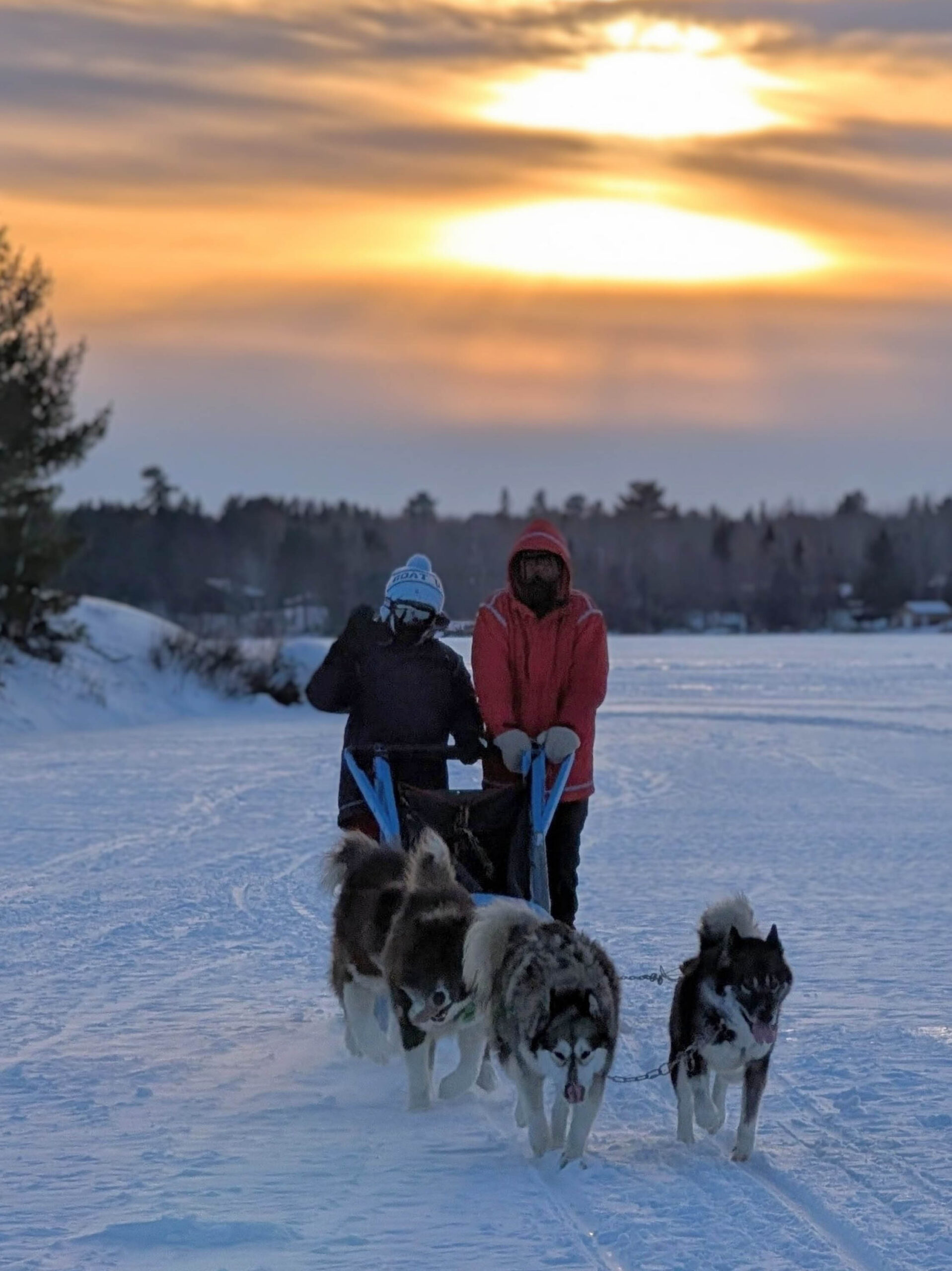
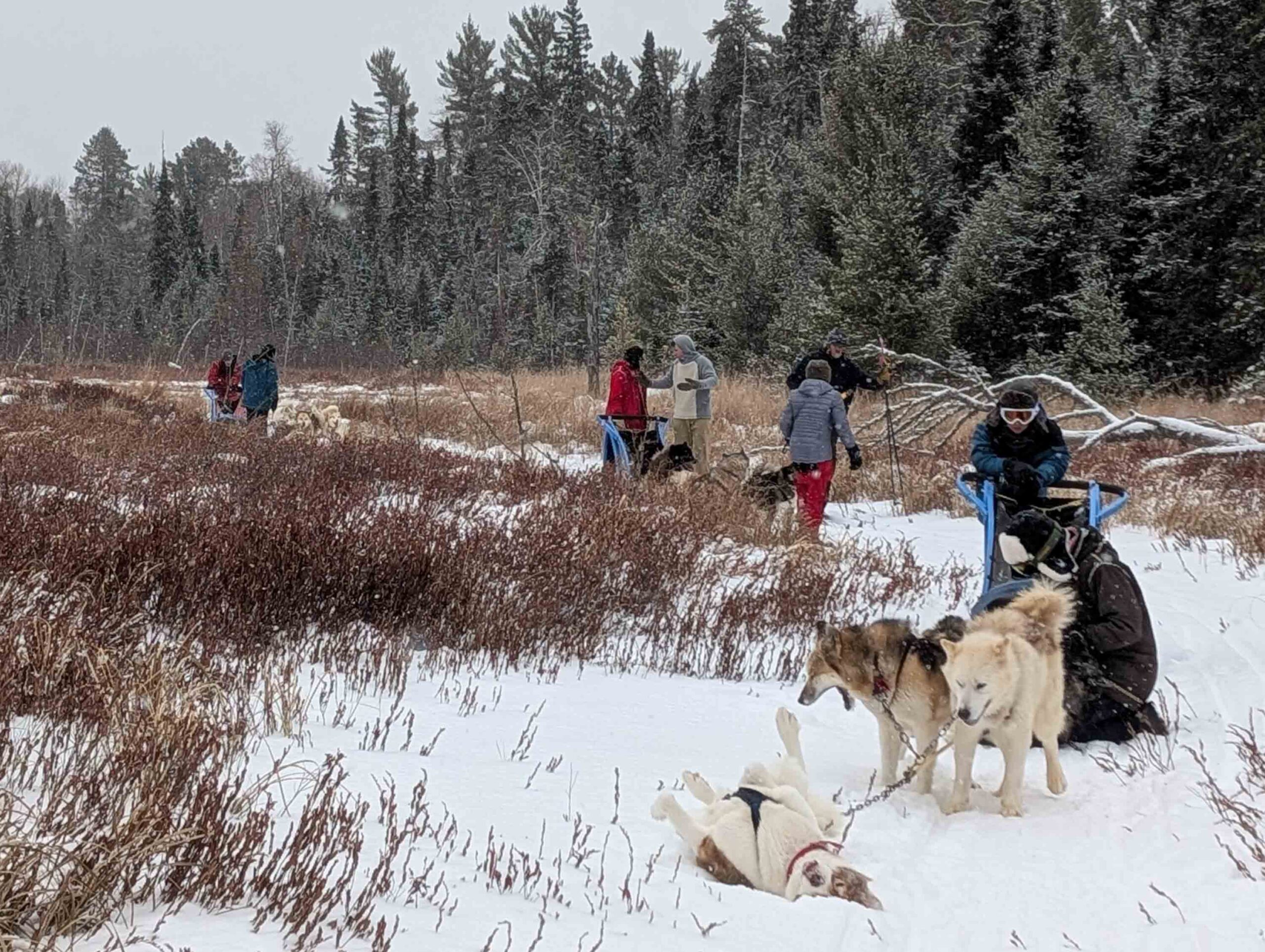
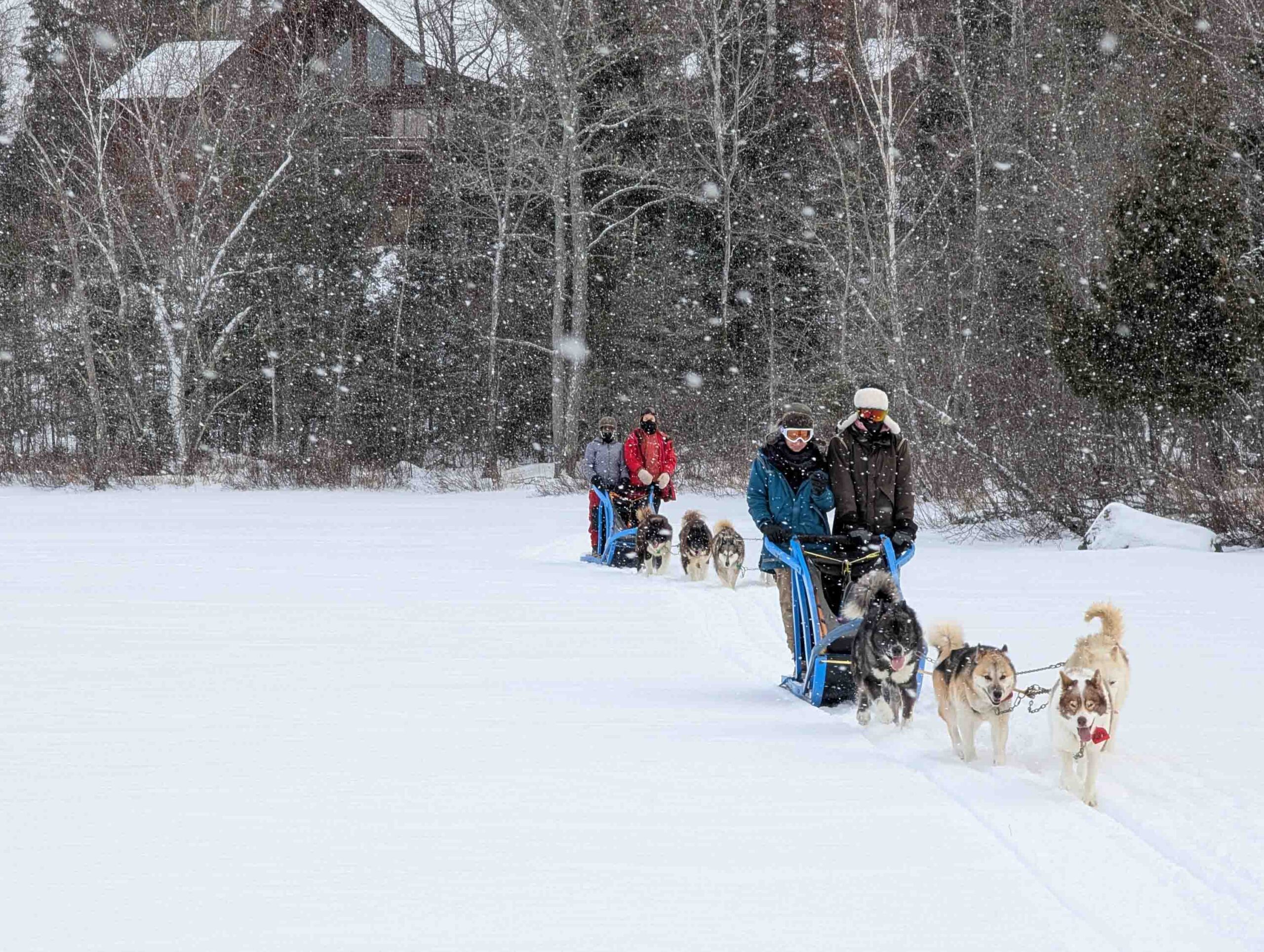
At the Wintergreen Dogsled Lodge in Ely, students learned winter skills like Nordic skiing, snowshoeing, skijoring (being pulled across snow by a horse, dogs, or vehicle), and winter ecology. Previous Riverdale workshops covered the Boundary Waters and the Indigenous people, dogs, and wolf populations who live there. But the main activity for a week in the frozen wilderness was caring for a dog team and mastering the basics of dogsledding through setbacks, heavy snow, and challenging trails.
Students didn’t just ride; they led, discovering that mushing demands trust, resilience, and teamwork. “They were responsible for their dogs, for each other, for their gear and preparedness from the cold: the consequences and the rewards were real,” says trip leader Tyler Telford, Middle and Upper School English teacher. “They learned to adapt, problem-solve, and push through discomfort, which underscored how their teamwork and care for each other and for their dogs had genuine impact.”
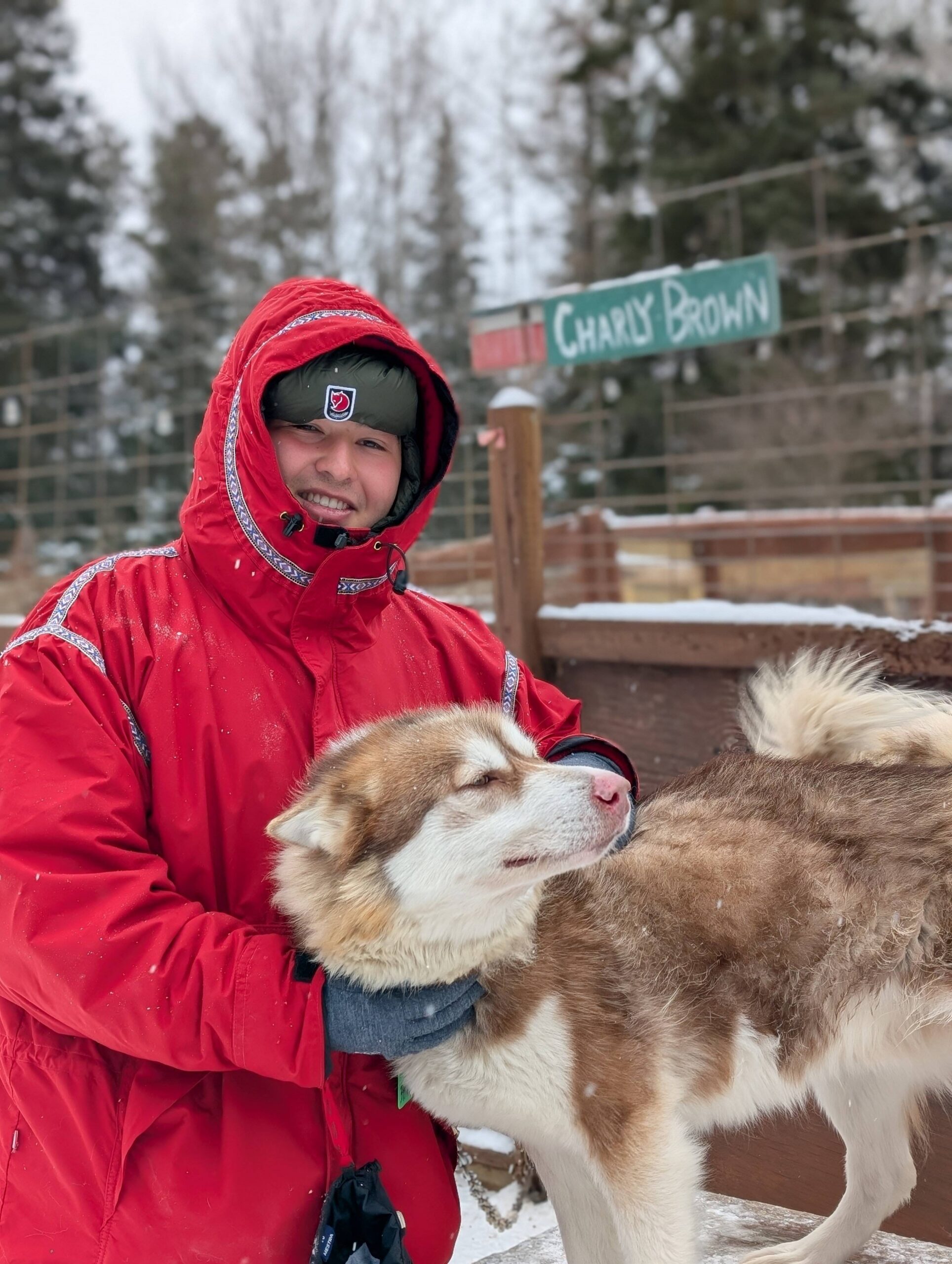
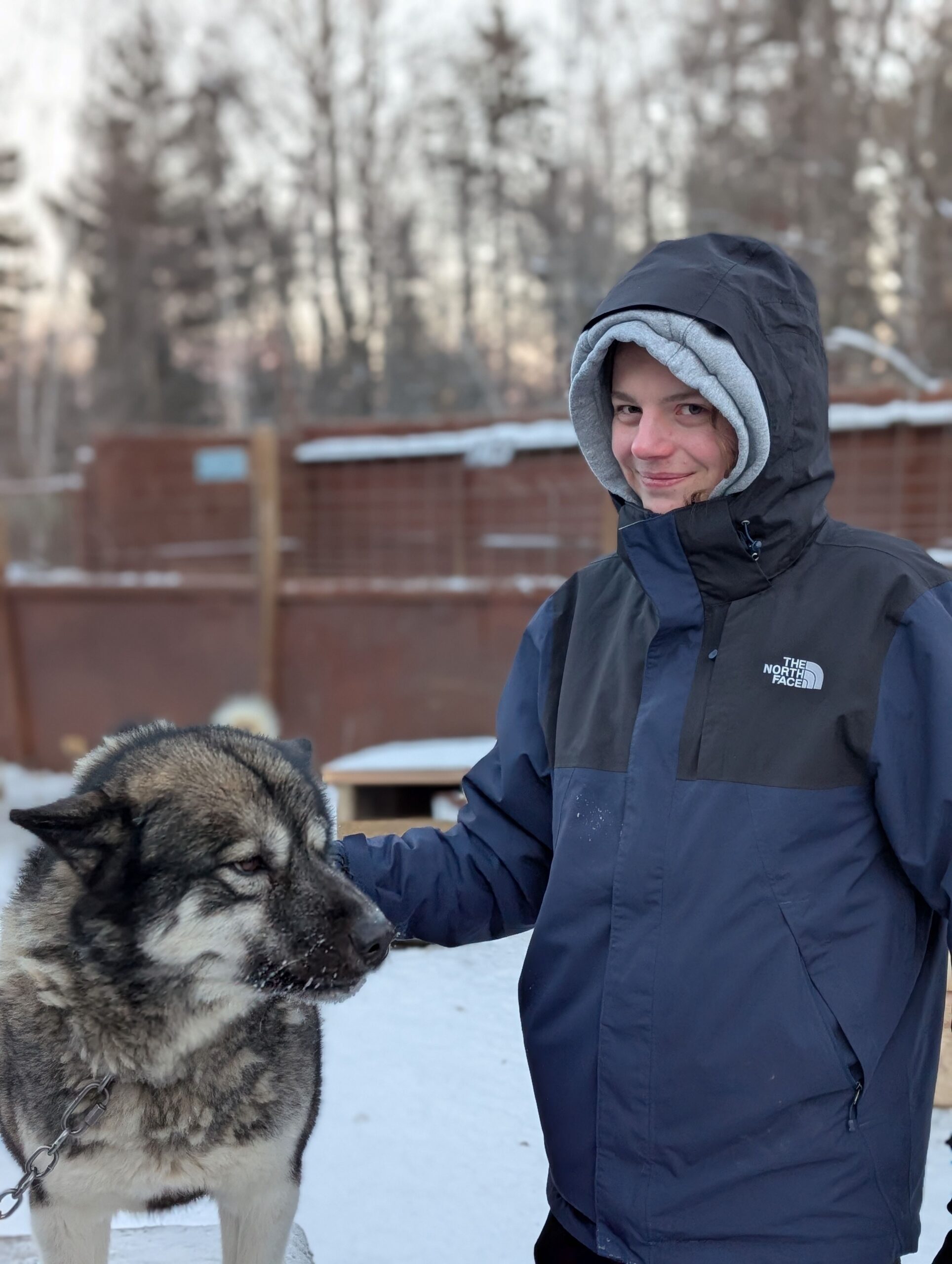
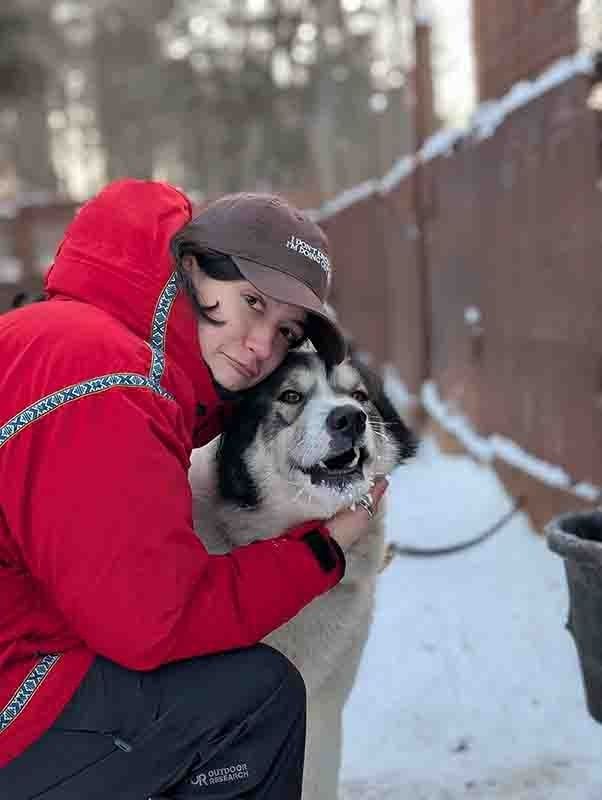
TELFORD AND JAKE CROWLEY-DELMAN, Director of Riverdale’s Experiential and Place-Based Learning, carefully researched this unique opportunity to move through the wilderness in ways that people have done for a millennium and to care for the Canadian Inuit dog, the oldest and most continuously domesticated dog breed in North America. “Most students developed favorite dogs and routinely asked for more time in the kennel to work with them,” Telford says. “By the end, they were confidently harnessing dogs, getting them to their kennels, feeding them, and doing light sled maintenance. Caring for the dogs taught students attentiveness, patience, and the reward of building trust with another living being.”
At the Wintergreen Dogsled Lodge in Ely, Minnesota, students learned winter skills like Nordic skiing, snowshoeing, skijoring (being pulled across snow by a horse, dogs, or vehicle), and winter ecology. Previous Riverdale workshops covered the Boundary Waters and the Indigenous people, dogs, and wolf populations who live there. But the main activity for a week in the frozen wilderness was caring for a dog team and mastering the basics of dogsledding through setbacks, heavy snow, and challenging trails.
Students didn’t just ride; they led, discovering that mushing demands trust, resilience, and teamwork. “They were responsible for their dogs, for each other, for their gear and preparedness from the cold: the consequences and the rewards were real,” says trip leader Tyler Telford, Middle and Upper School English teacher. “They learned to adapt, problem-solve, and push through discomfort, which underscored how their teamwork and care for each other and for their dogs had genuine impact.”
Riverdale faculty carefully researched this unique opportunity to move through the wilderness in ways that people have done for a millennium and to care for the Canadian Inuit dog, the oldest and most continuously domesticated dog breed in North America. “Most students developed favorite dogs and routinely asked for more time in the kennel to work with them,” Telford says. “By the end, they were confidently harnessing dogs, getting them to their kennels, feeding them, and doing light sled maintenance. Caring for the dogs taught students attentiveness, patience, and the reward of building trust with another living being.”
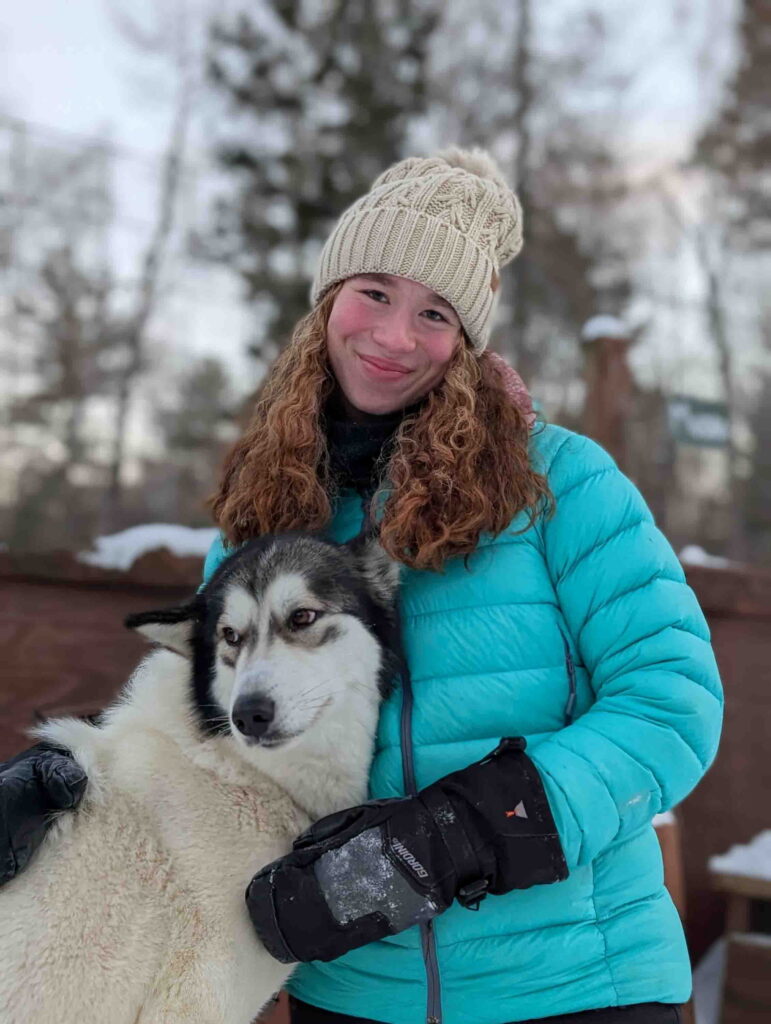
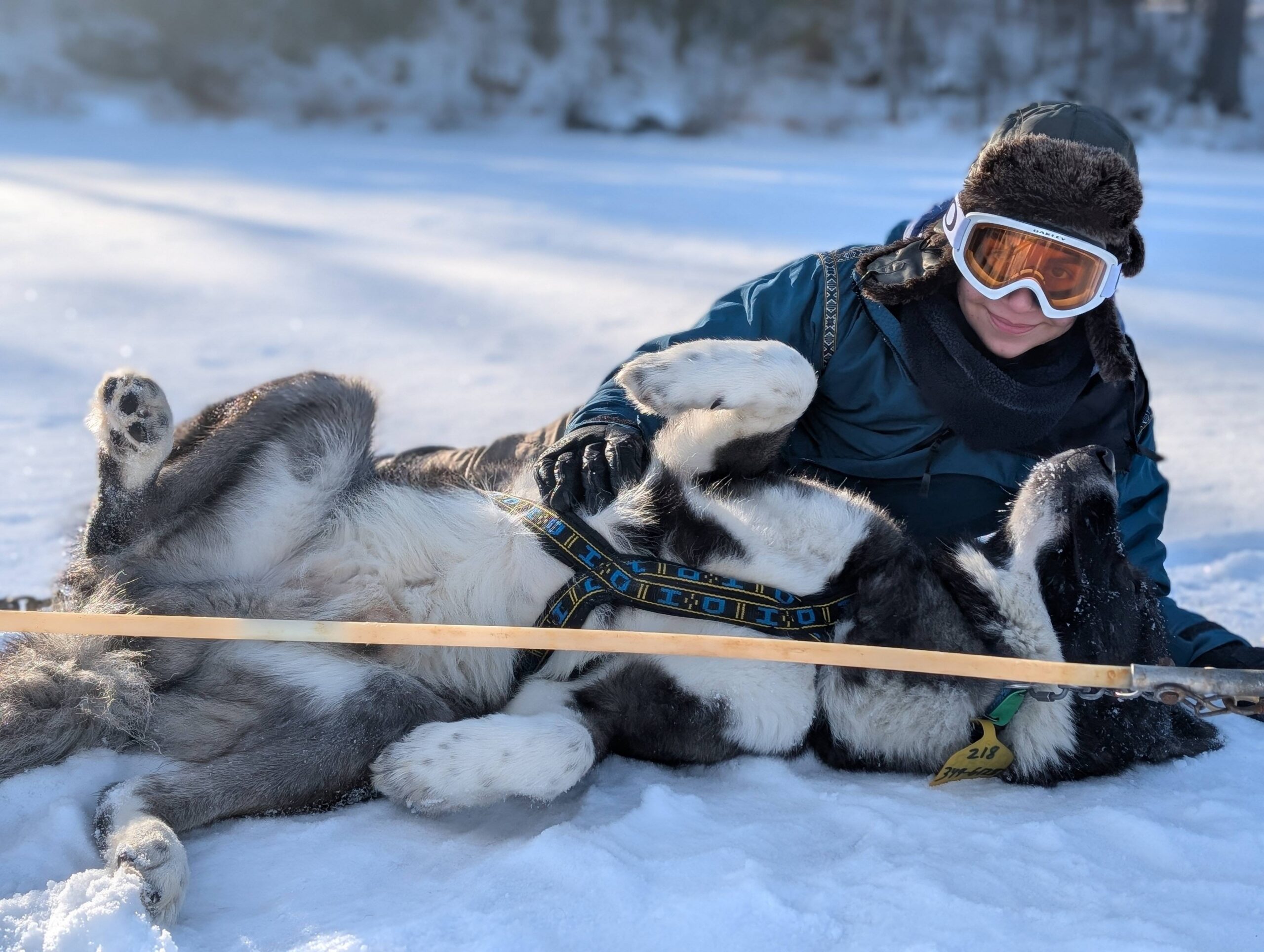
Emily Van ’27 and Uno (pictured here) actually bonded before the trip. Telford gave each student a photo of a dog he had met previously while researching the dogsledding experience. “I loved getting to pet and play with the dogs when we stopped on the trail,” Van says. “While they are working dogs, they love lying down for belly scratches or jumping up to say hi to you. Sometimes on the trail, the dogs wouldn’t listen to us. We just had to hang onto the sled and go along for the ride.” Teamwork was taught by human and canine teammates. “I learned this from the dogs when they had to all pull together with the same force,” Van adds. “Similarly, I had to work and communicate with other students to push the sled.”
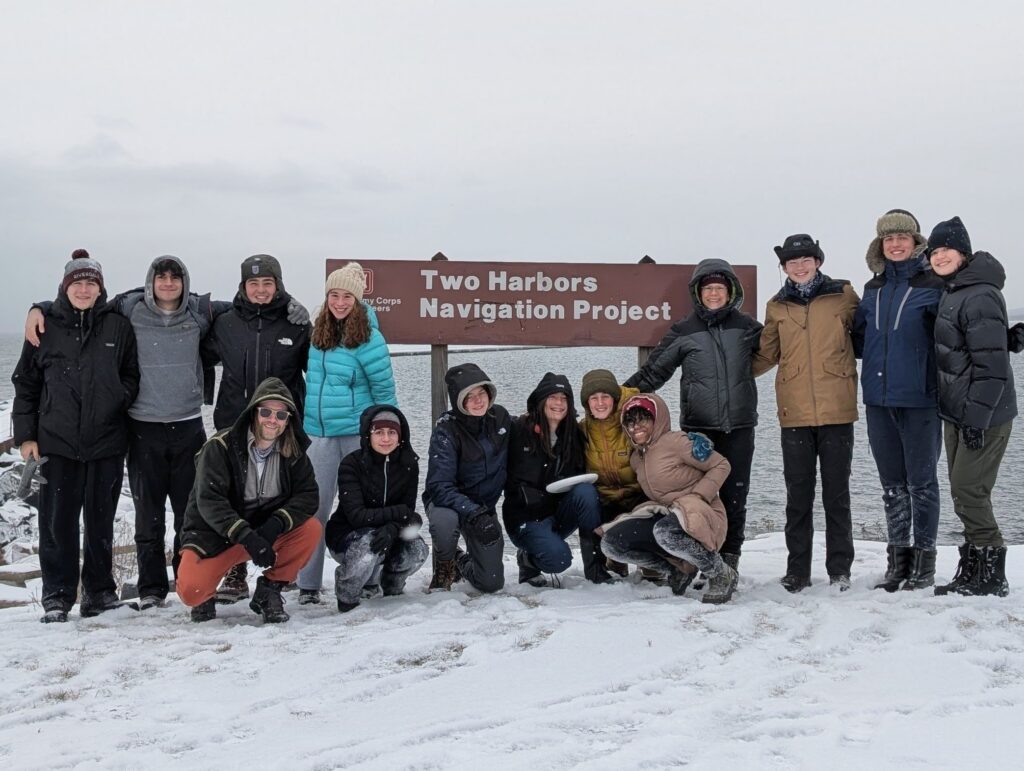
Riverdale’s Experiential and place-based learning programs and trips are non-traditional “classrooms” where students experience profound character development. “If students can care for and love and experience a new place, they’re more likely to care for their home, community, and school,” explains Jake Crowley-Delman, Program Director. “They get out of their comfort zone to become better leaders, teammates, and community members.”
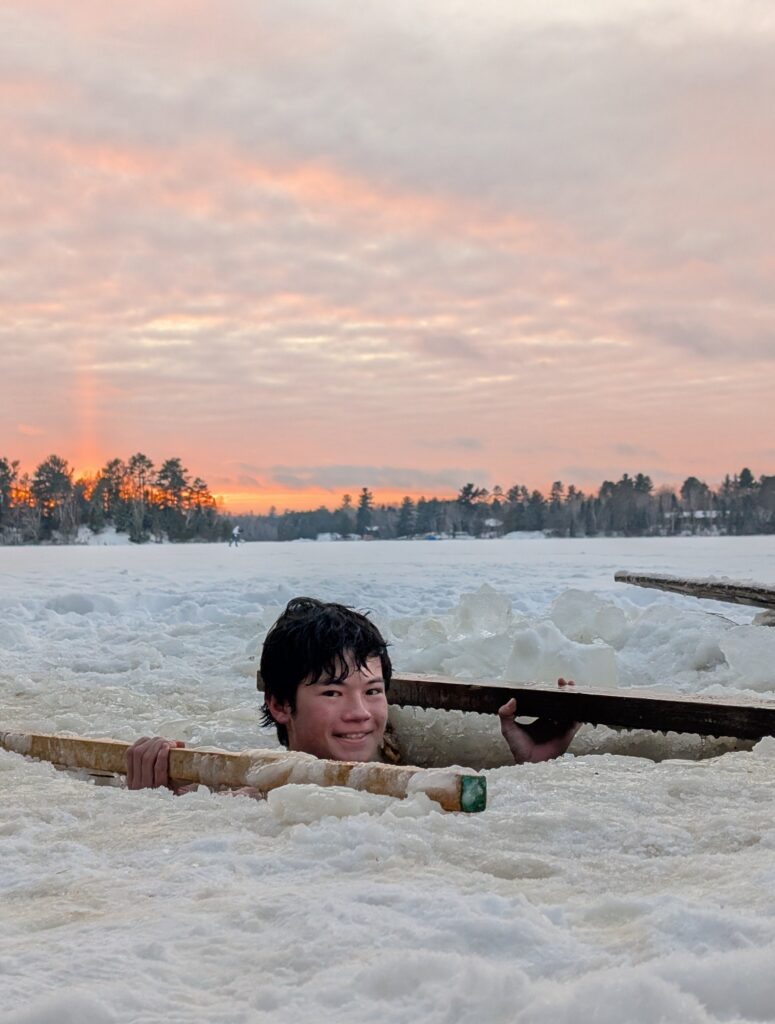
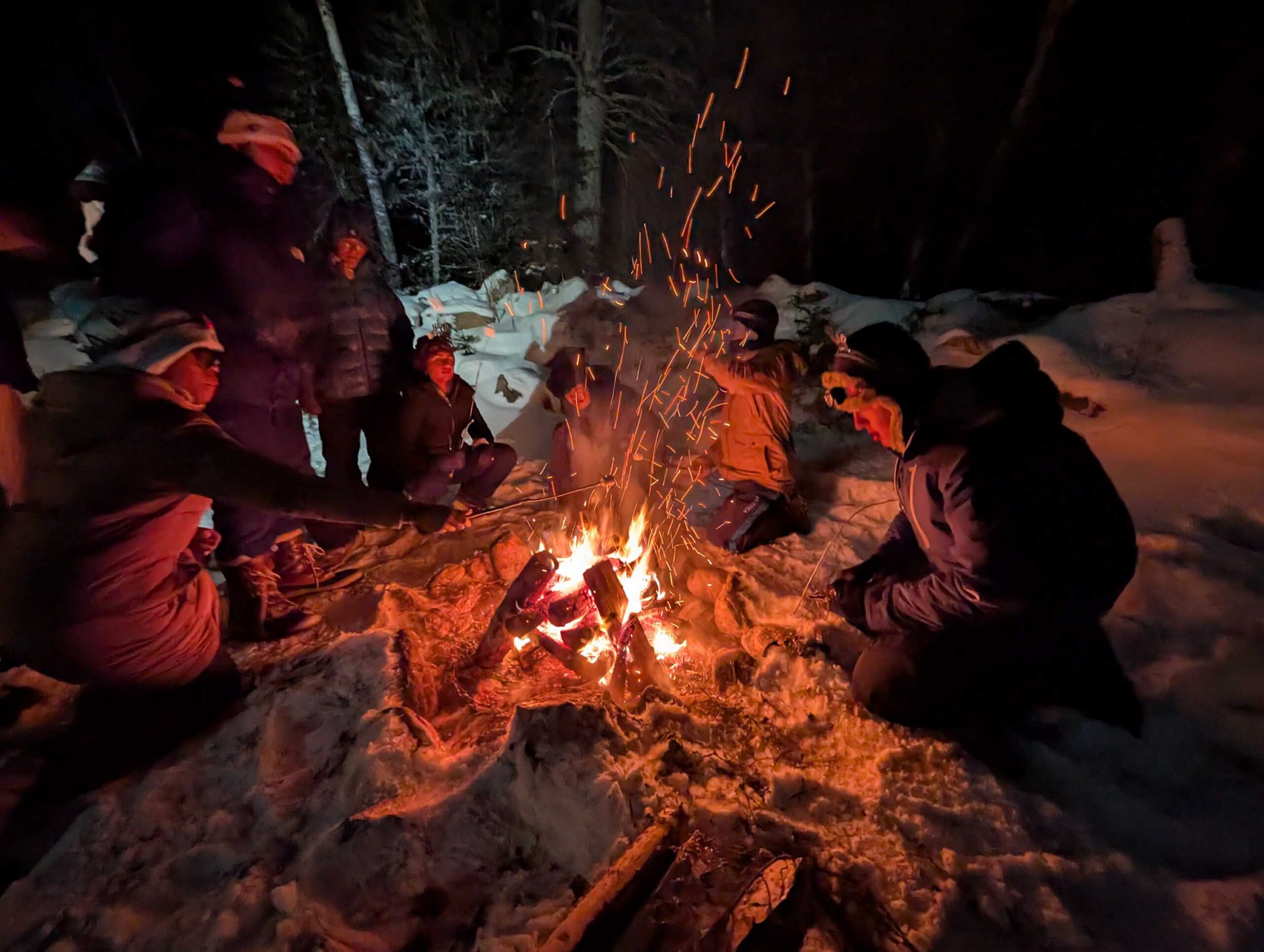
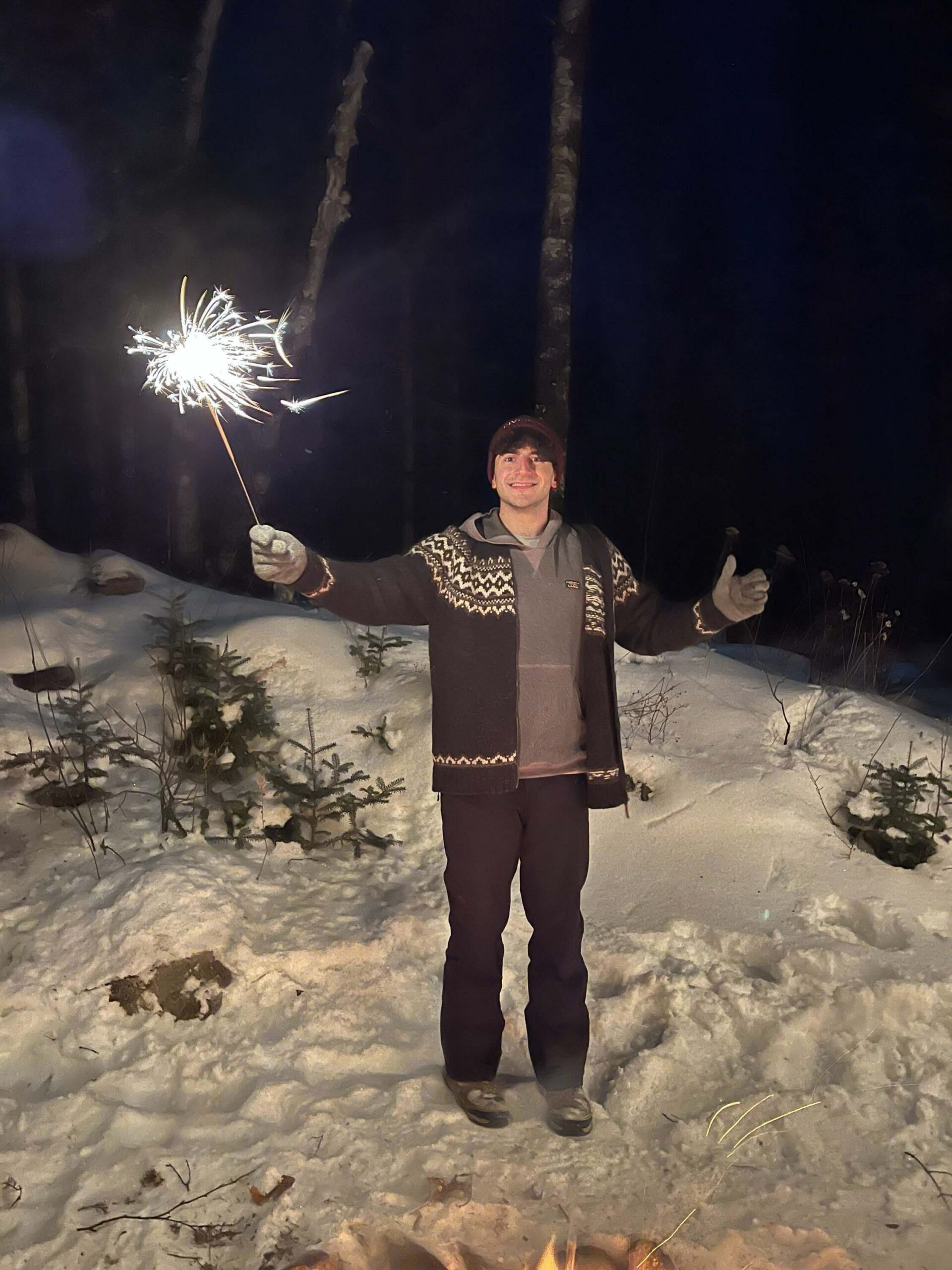
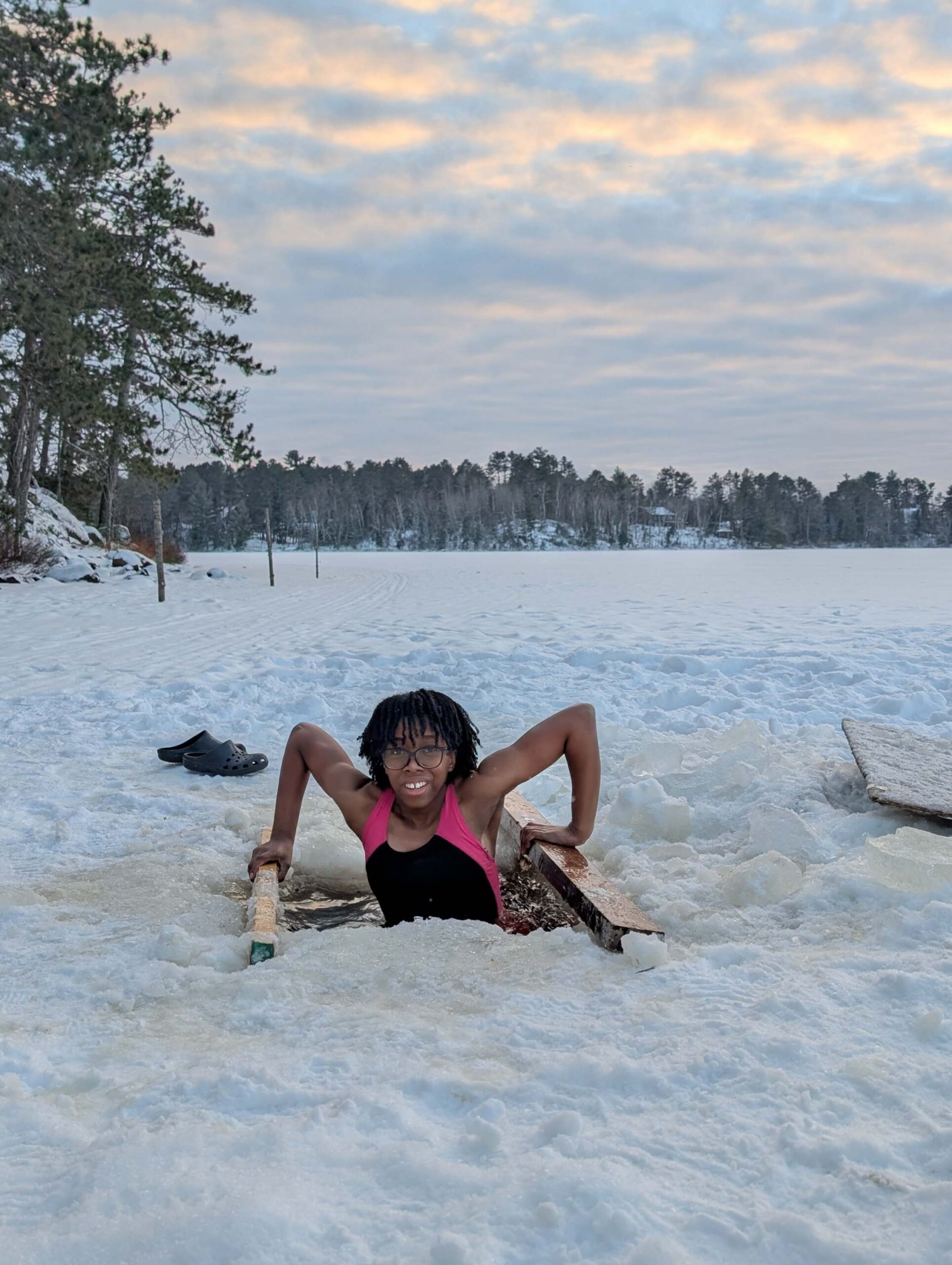
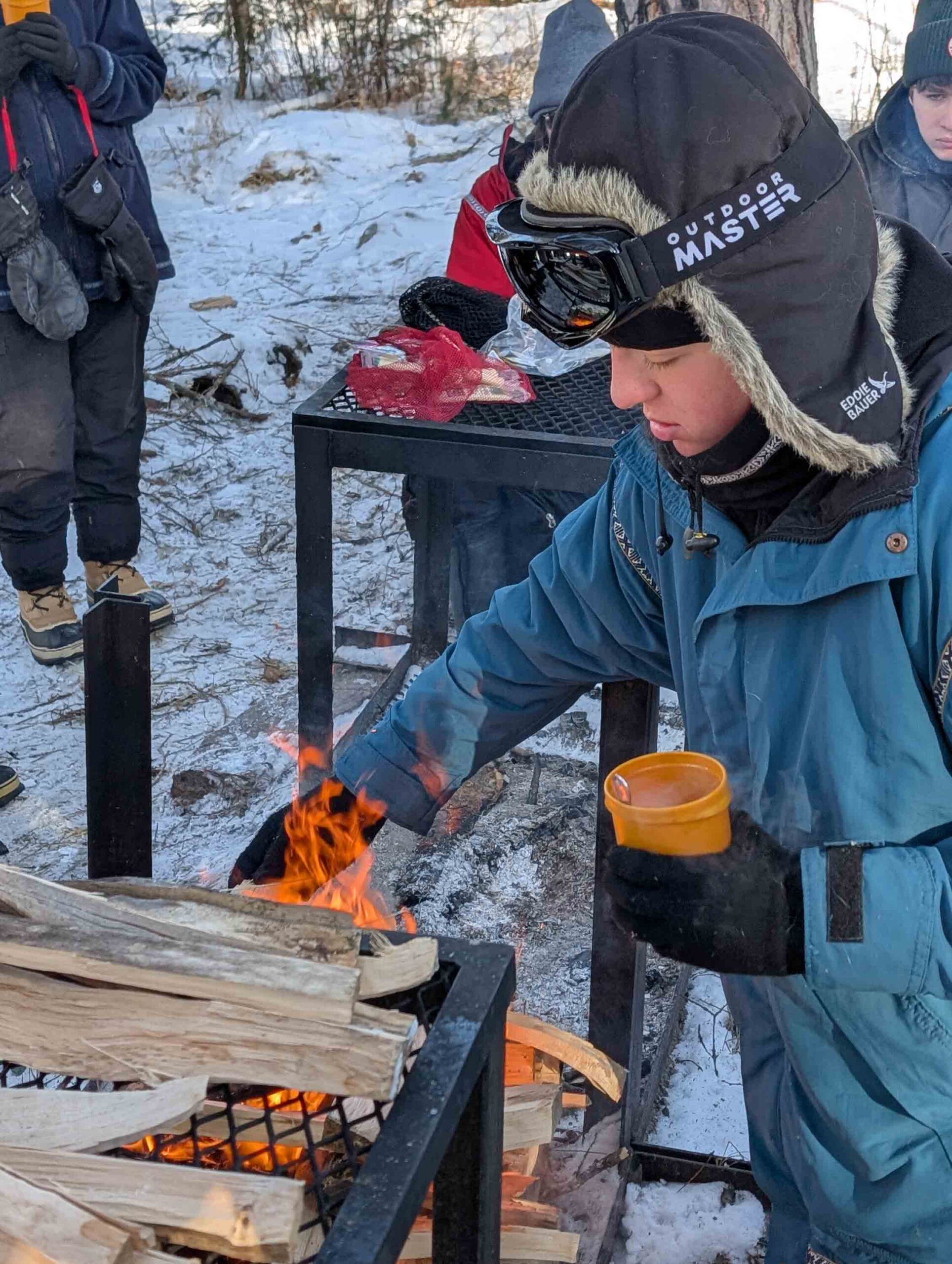
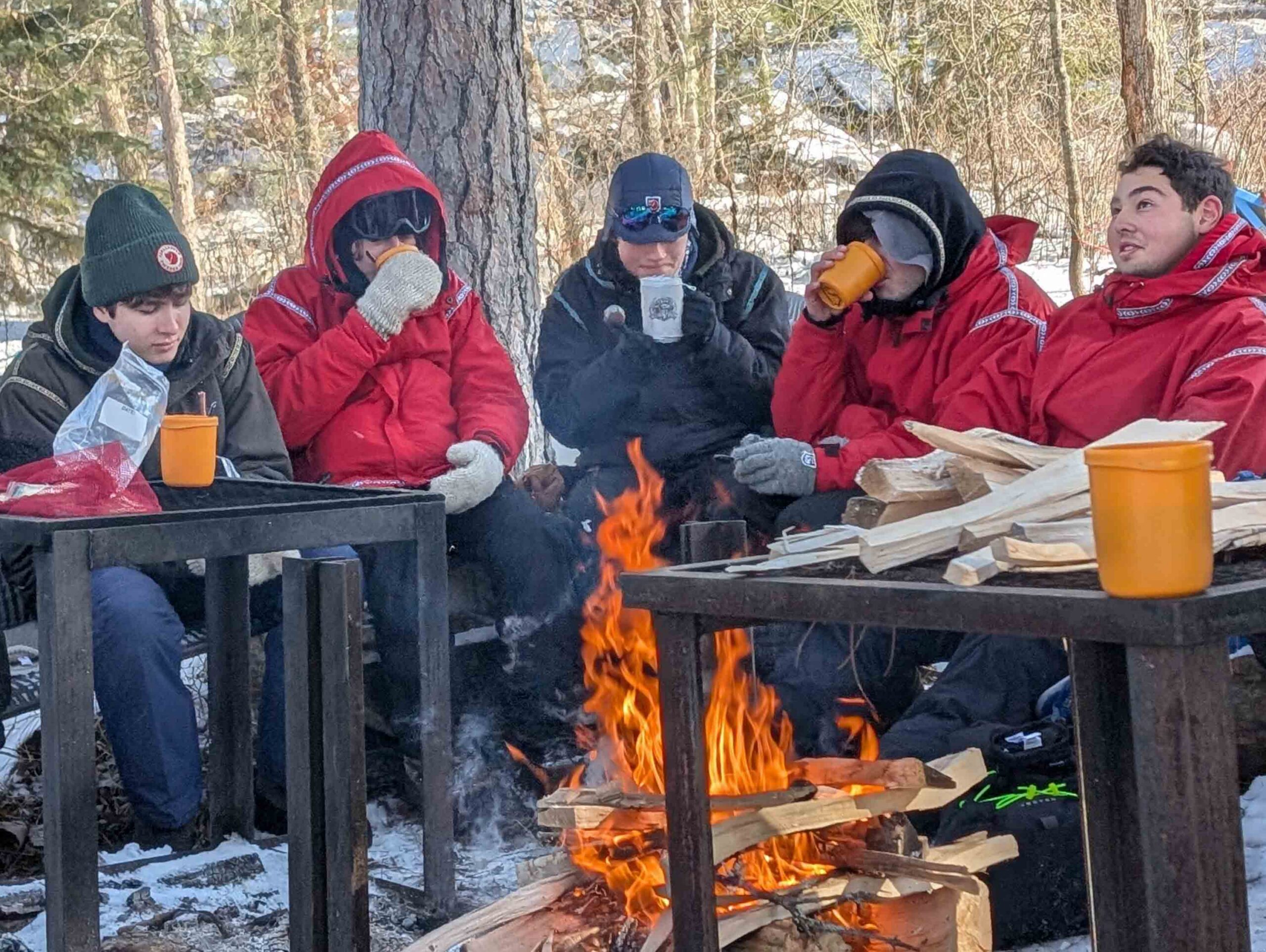
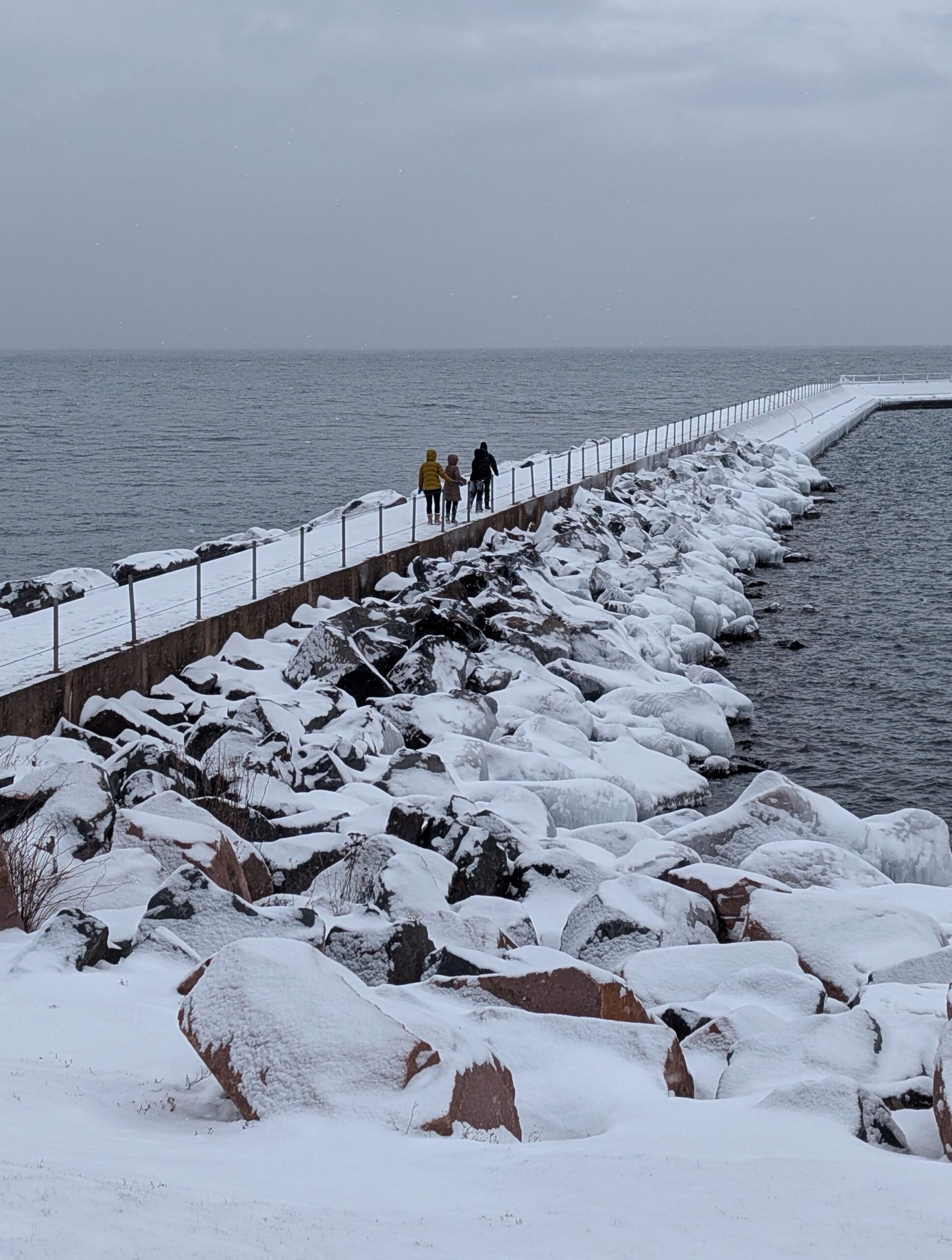
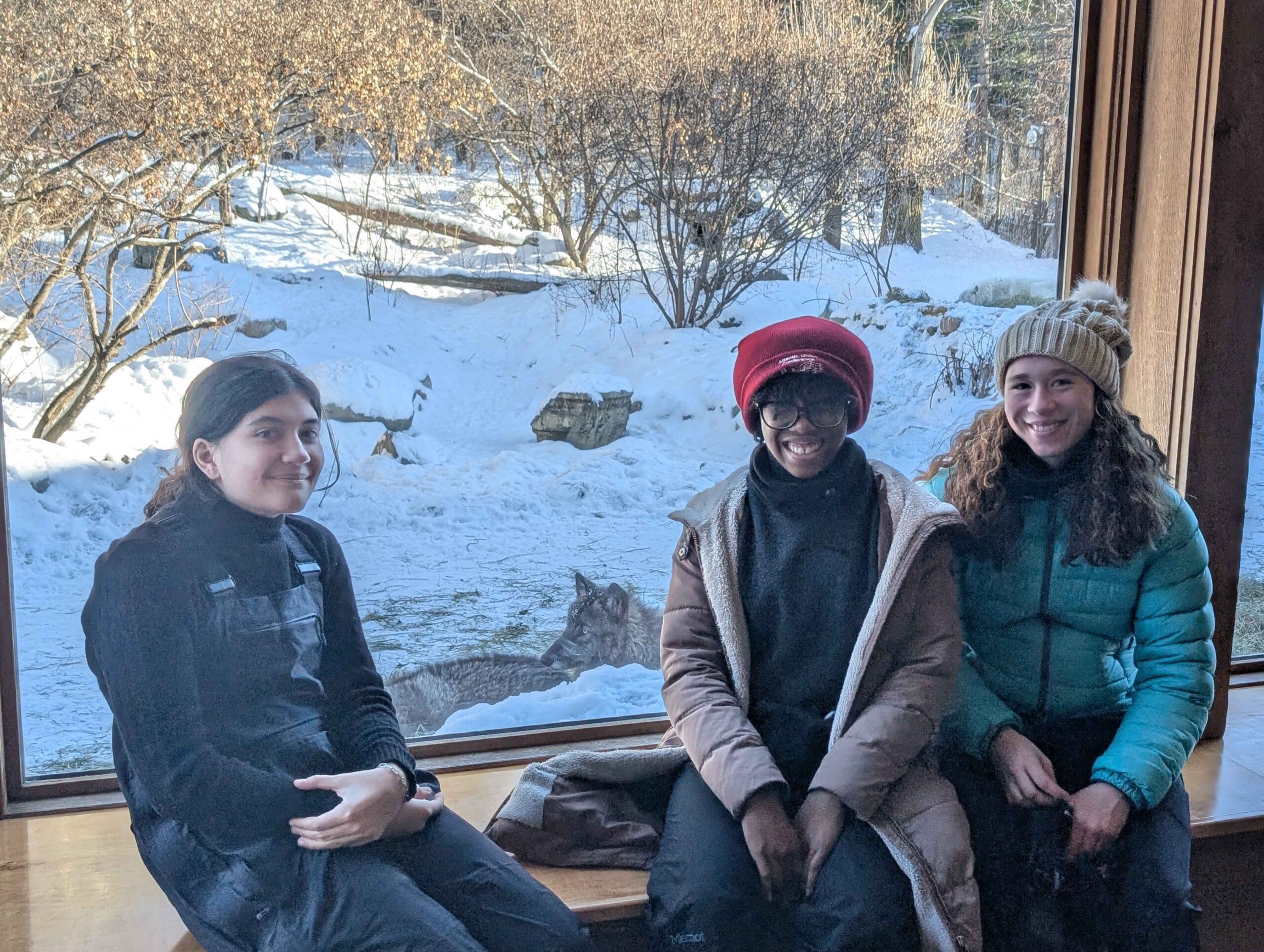
Snowy adventures included visiting Ely’s International Wolf Center, evening fires, saunas, and a final-day ice plunge. One of the first ones in the water was Eric Chudy ’26, who stayed in the water the longest, thanks to his competitive nature and desire to lead by example. “Whenever there’s a chance to get people motivated to try something new, I never hesitate to show that everything will be great,” he says. “Community isn’t just a group of people. It’s a group of people who bond over shared experiences.” (For the record, the water temperature hovered just below freezing, and Chudy is on record that the sauna that immediately followed felt great.)
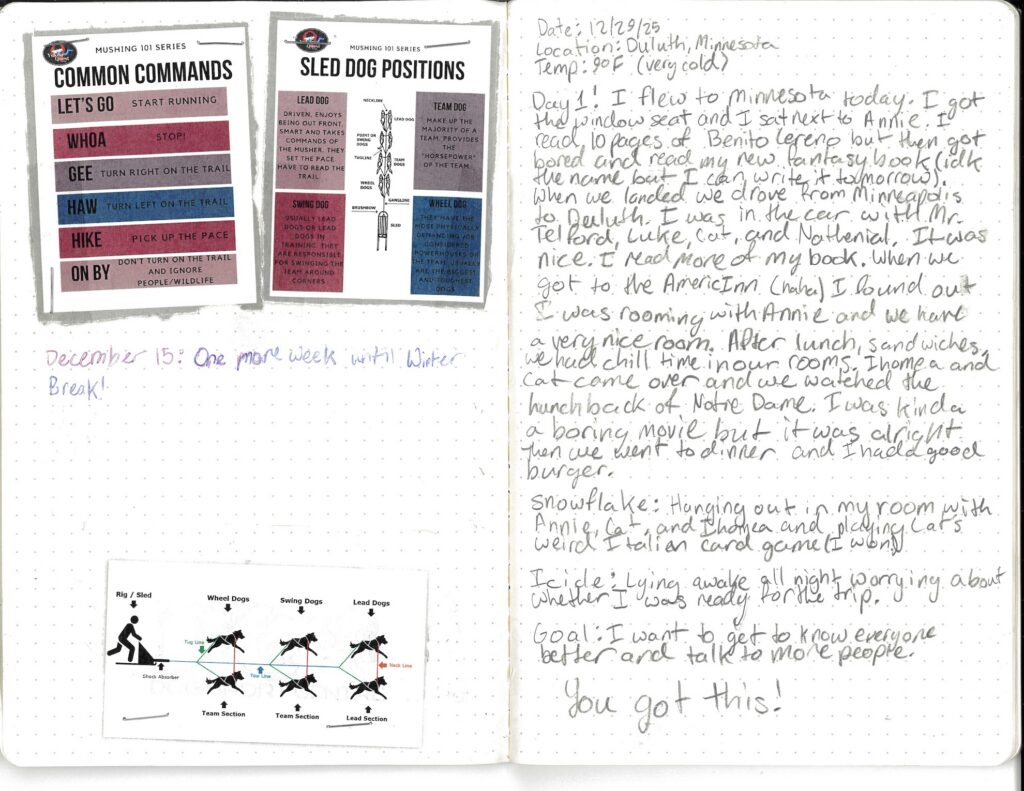

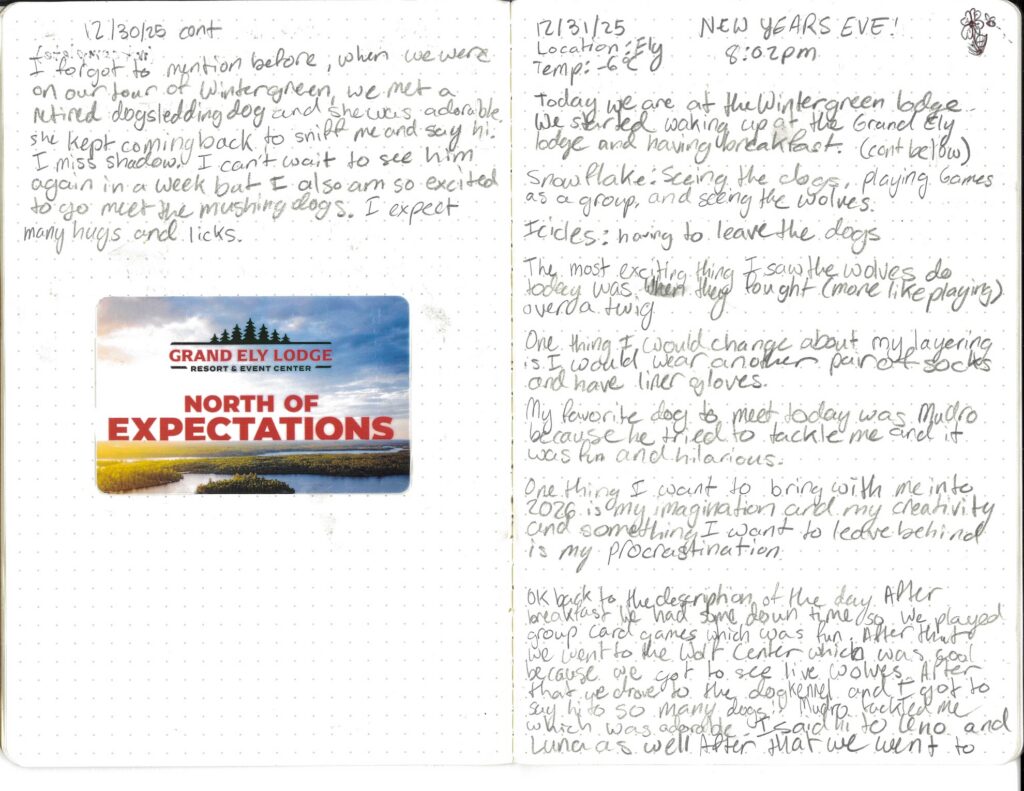
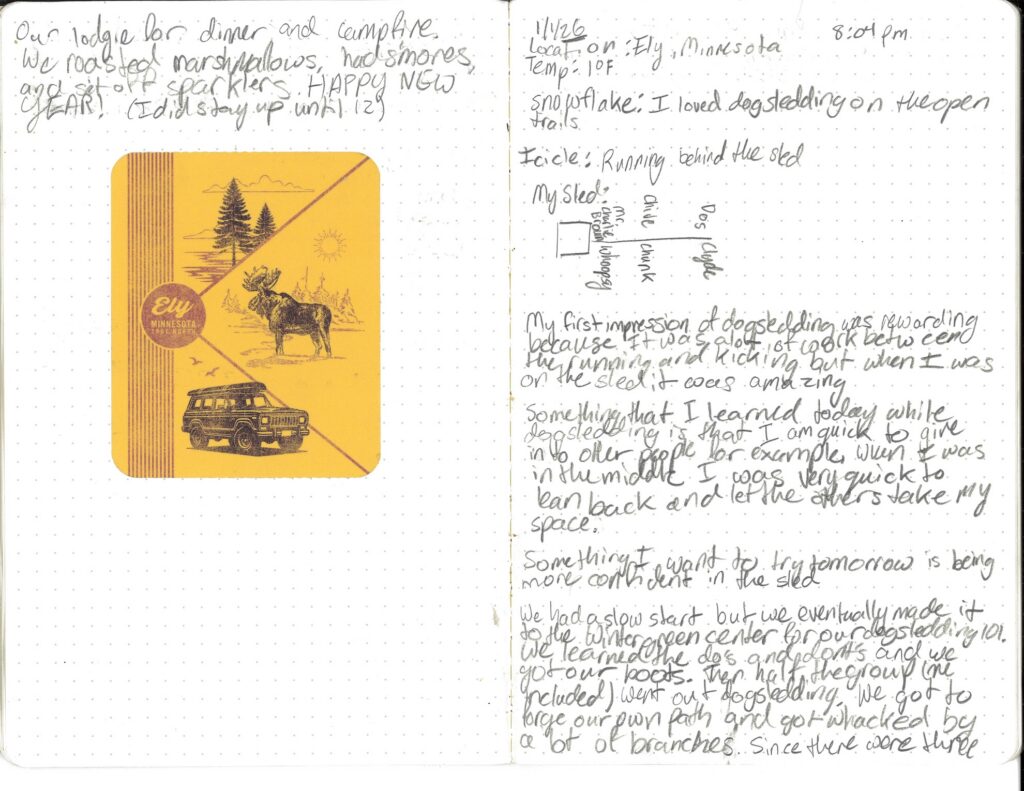
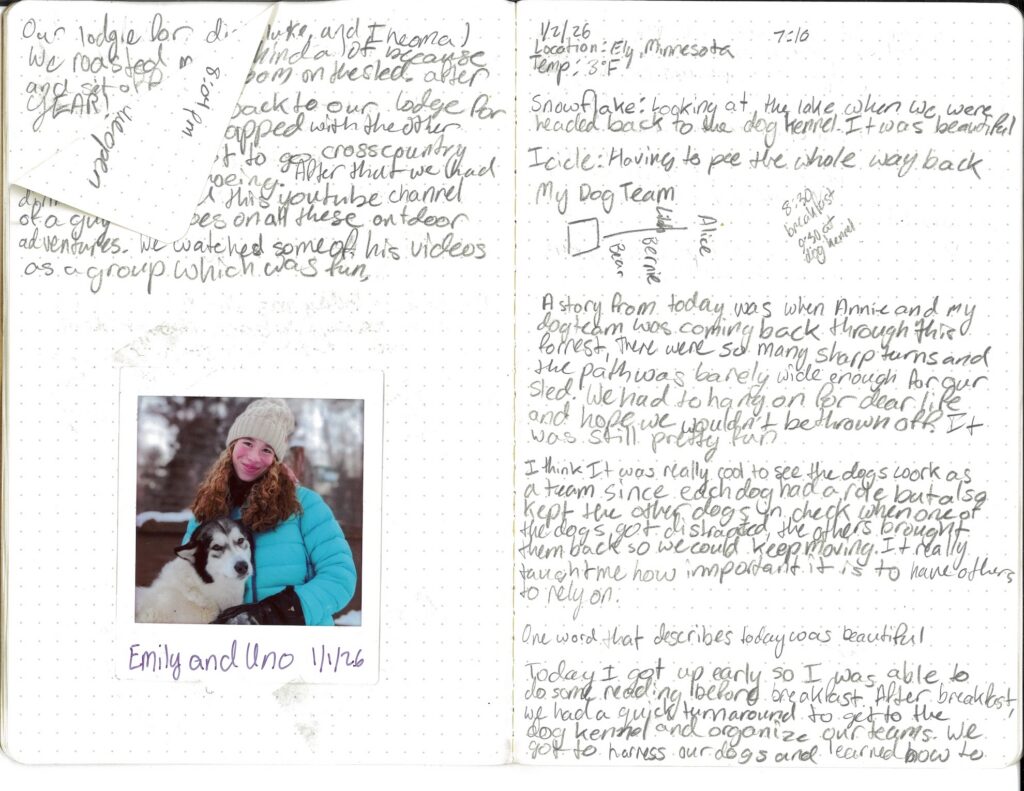
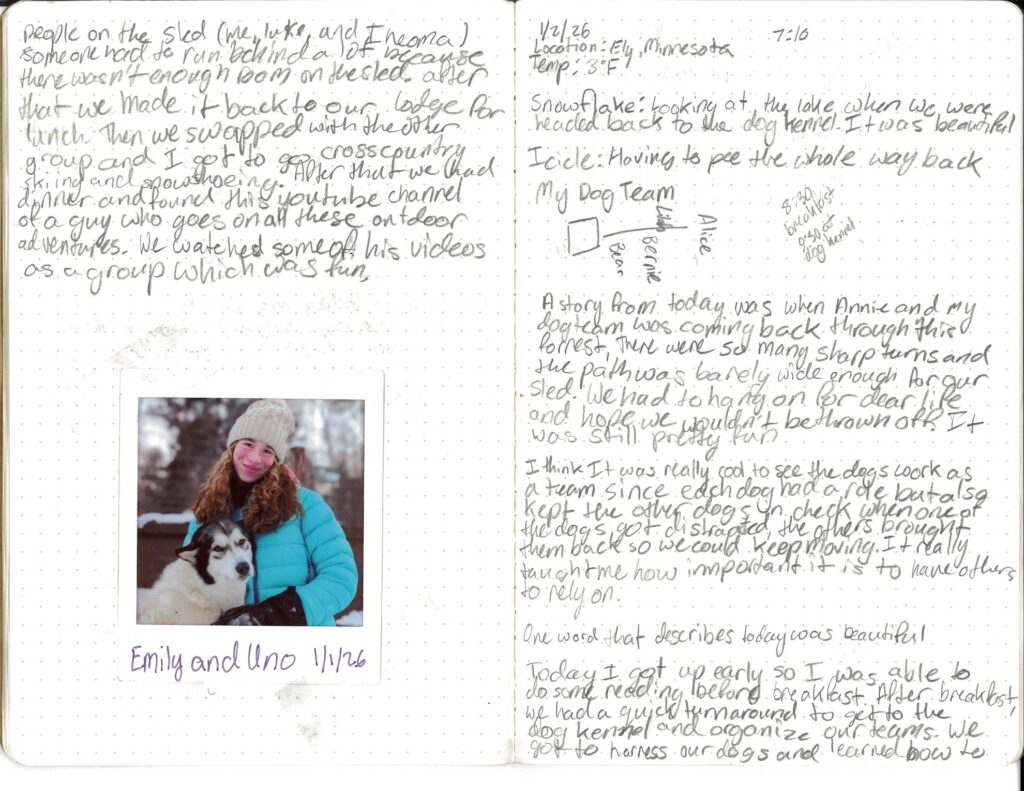


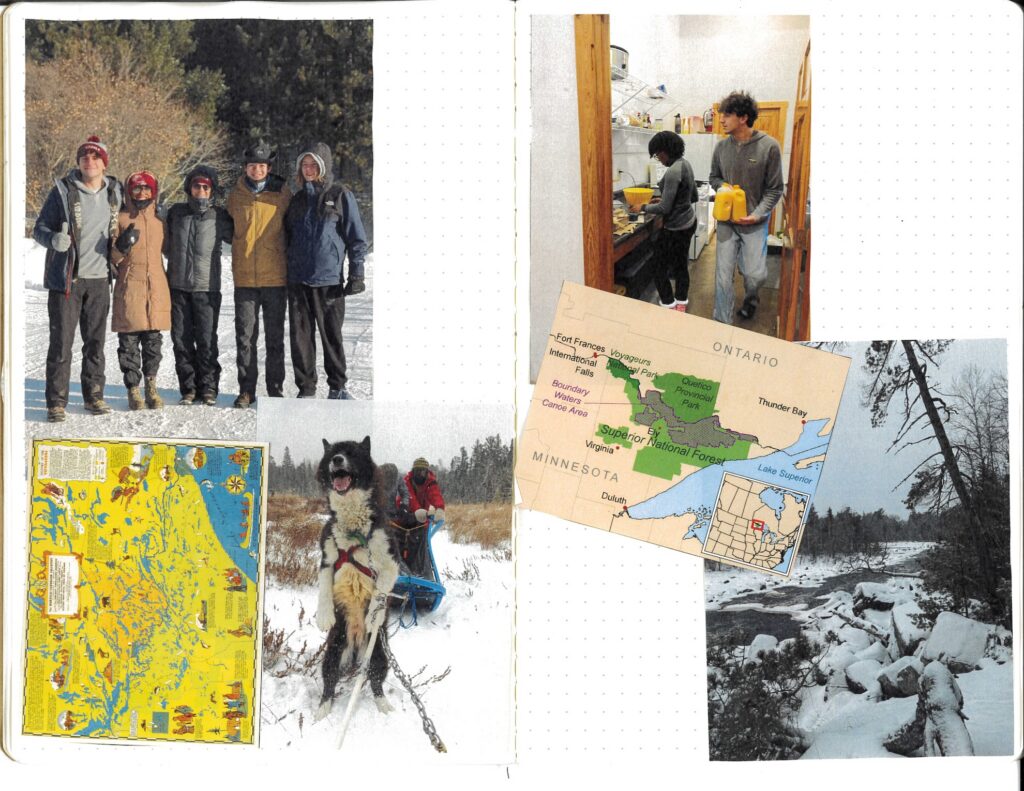
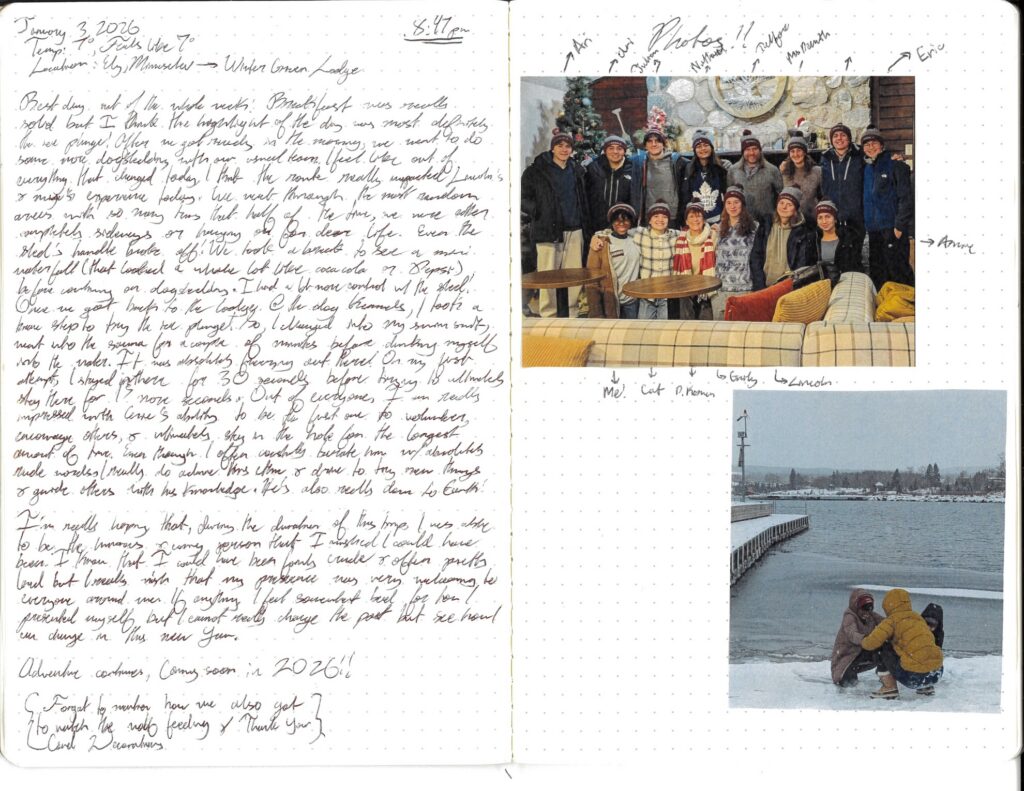

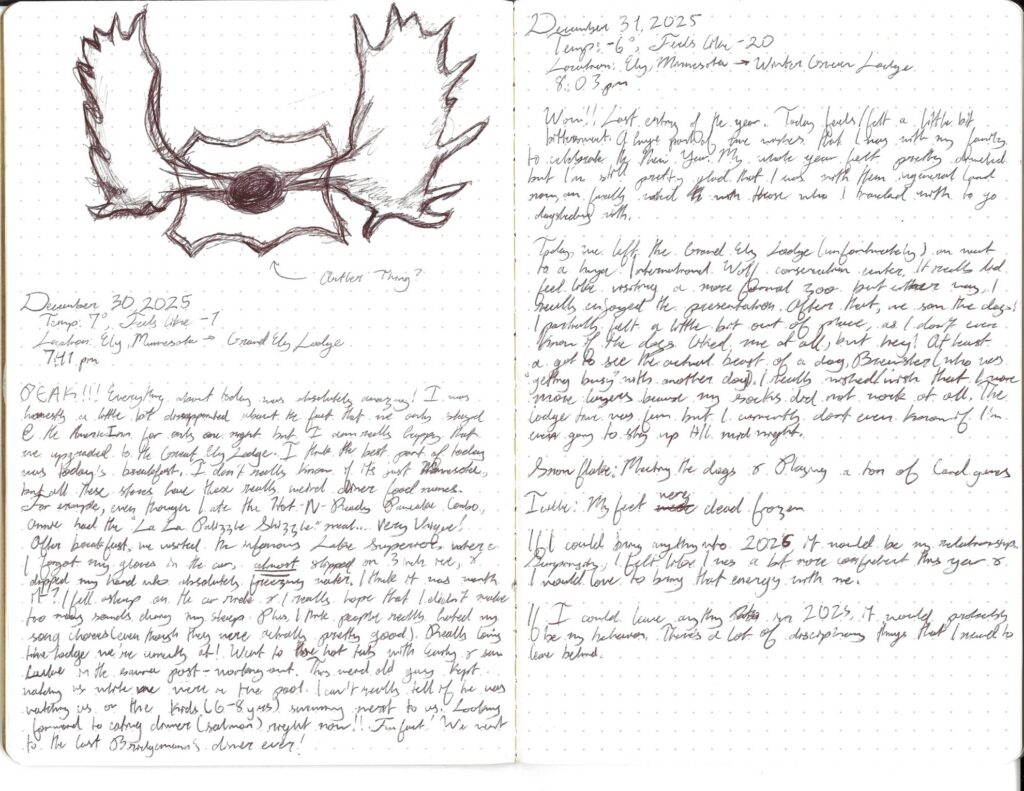
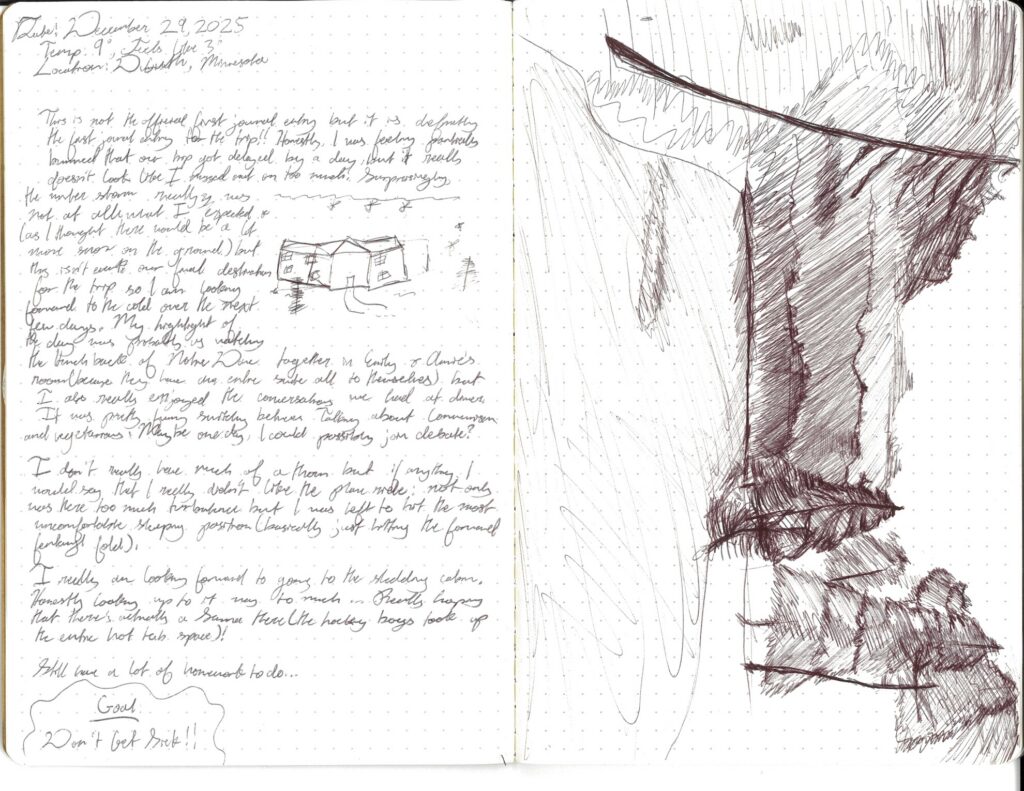
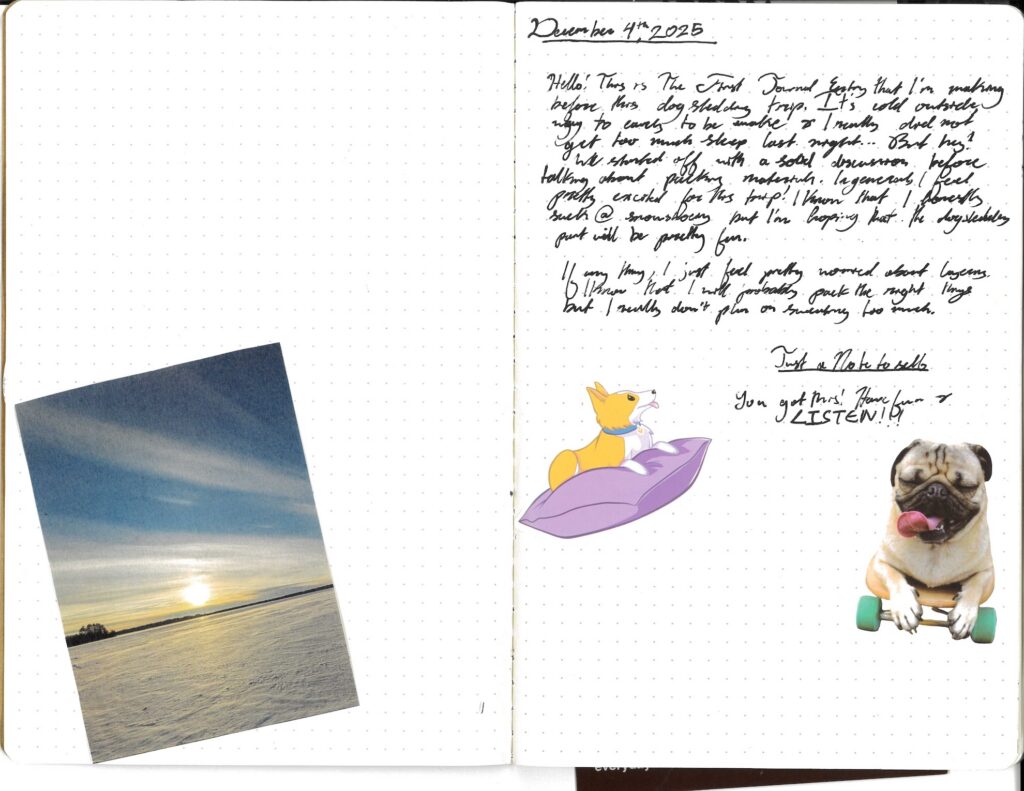
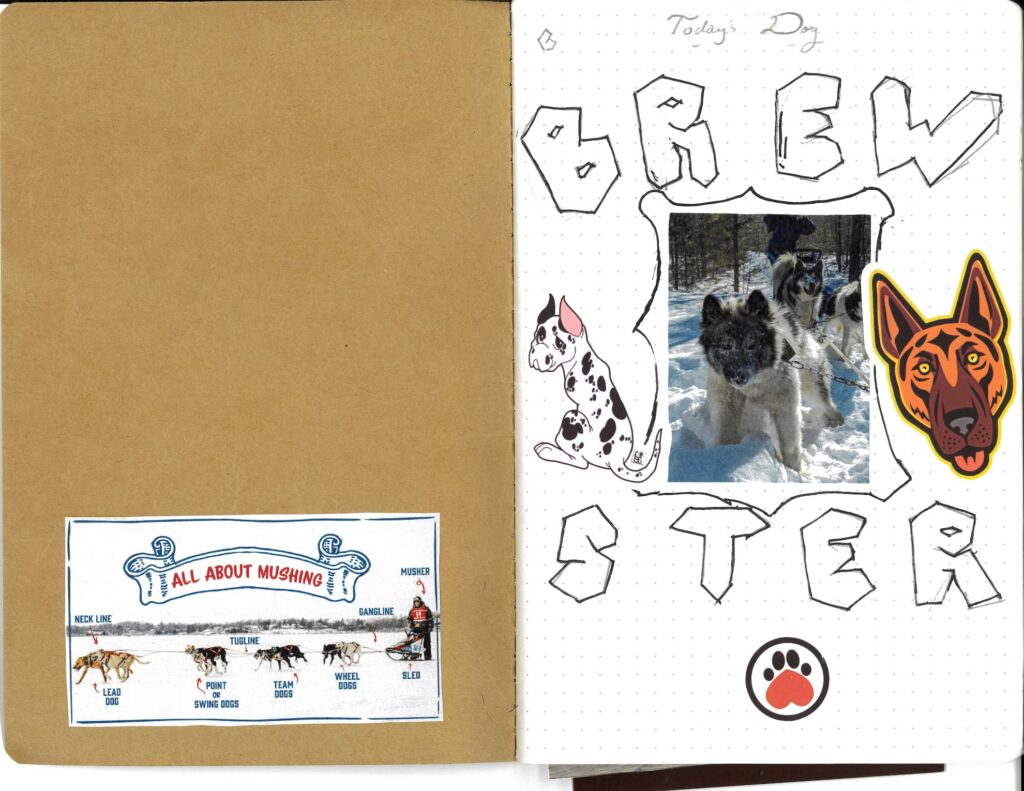
Each student kept a daily field journal to observe and reflect on nature and the dogs through notes and art.